Imagine you have a floral midi dress ready for Monday, then remember that your office has a client presentation and a written dress code. The print looks quiet at home, but will it read as polished in a conference room? And will the hem stay in place when you sit? The useful answer depends less on a general idea of “office appropriate” and more on the rules, your day’s tasks and how the dress behaves in motion.
Start with the actual policy, not a styling rule borrowed from another workplace. A floral dress may be an easy choice in a relaxed office and unsuitable where the code requires tailored separates or a uniform. When the wording is unclear, ask a manager or consult the employee handbook before relying on an outfit to test the boundary.
Let the written dress code set the limits
Look for specifics: whether dresses are permitted, required coverage, rules about sleeveless styles, hem expectations, footwear restrictions and any separate standards for client-facing days. “Business casual” can mean different things from one workplace to another, so use examples supplied by your employer rather than assuming the phrase settles every question.
If a rule prohibits floral prints, casual dresses or dresses altogether, do not try to make one pass by adding a blazer. A jacket can change an outfit’s formality, but it does not override policy. If the rules permit dresses but leave room for judgment, consider the setting: a desk day, a presentation and a site visit may call for different choices even within the same office.
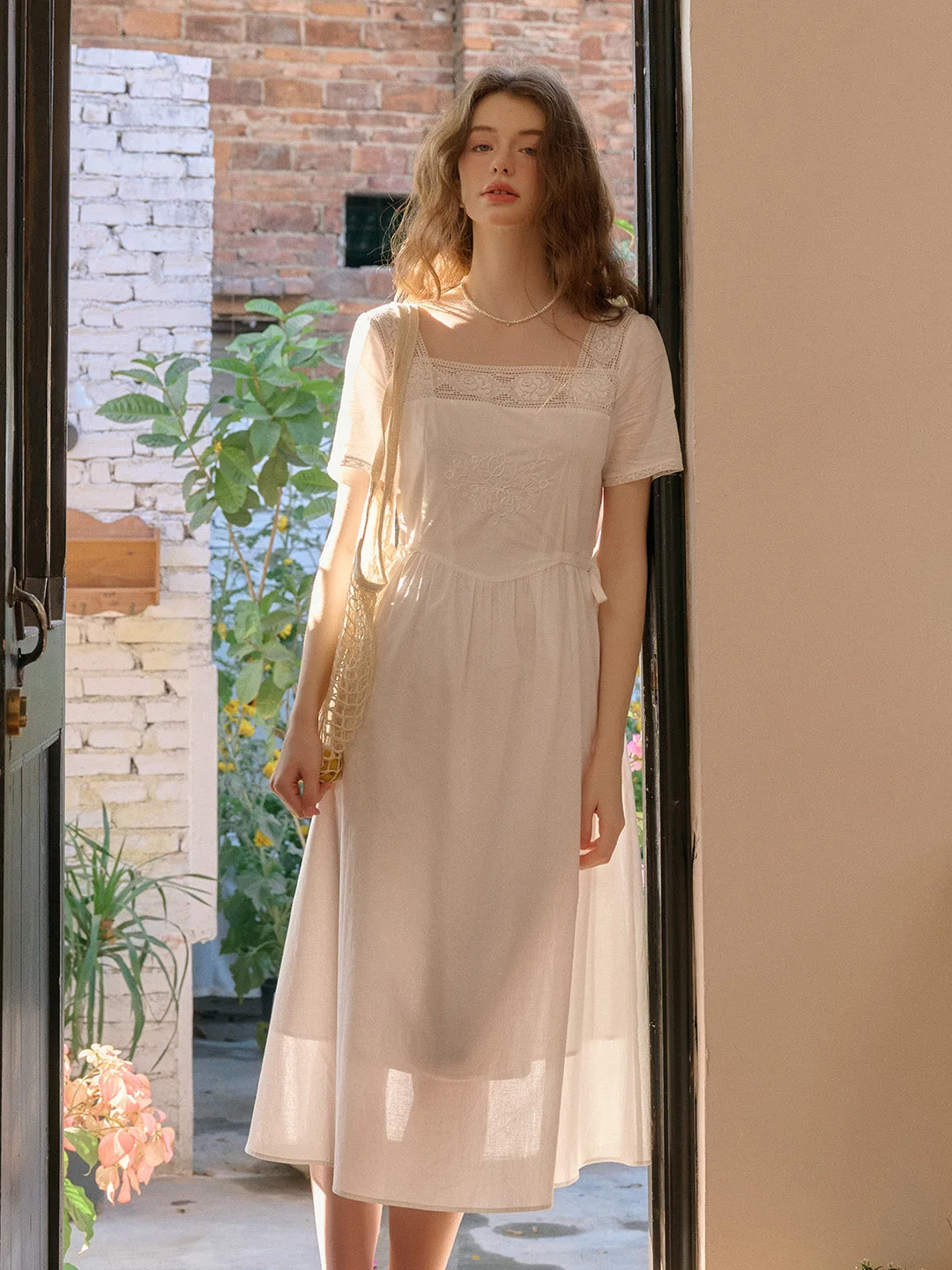
For a permitted option, browse the dresses collection with your workplace requirements in mind. Treat product photos as a starting point, not a substitute for checking the item’s details and your own fit.
Choose print scale for the room, not a universal rule
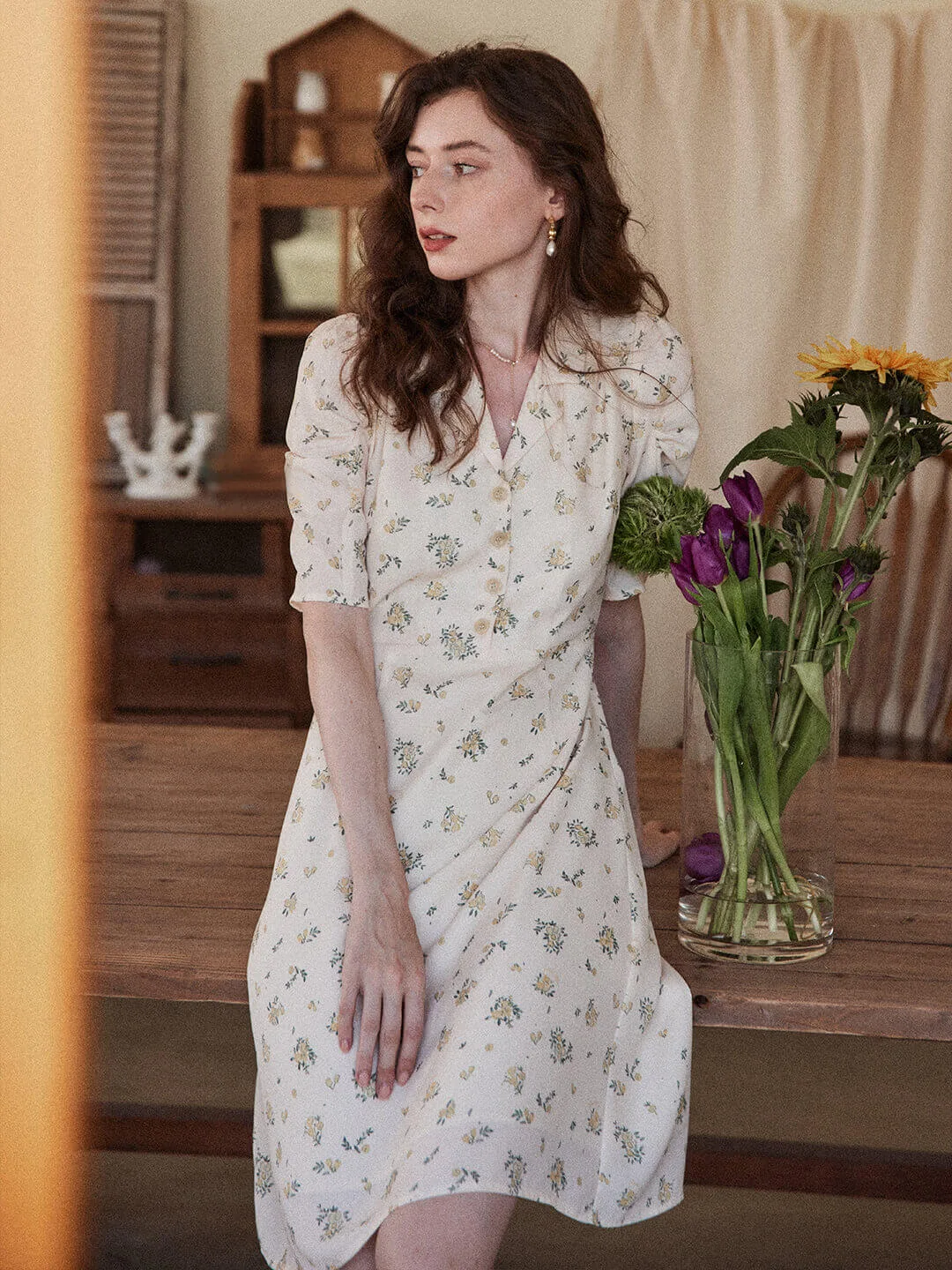
A small, low-contrast floral often feels quieter from a distance than a large, high-contrast pattern. That can make it a reasonable starting point for a conservative office that allows prints. A large bouquet motif or several vivid colors may draw more attention; it is not inherently unprofessional, but it may feel out of step with a formal environment or the expectations for a particular meeting.
Check the print in the light where you will wear it, and look at it from several feet away. If you can, take a quick phone photo and view it at normal screen size. Does the pattern read as a soft overall texture, or as the dominant feature of the outfit? Neither answer makes the dress right or wrong. It helps you decide whether to keep the rest of the outfit visually simple or choose a quieter print for that day.
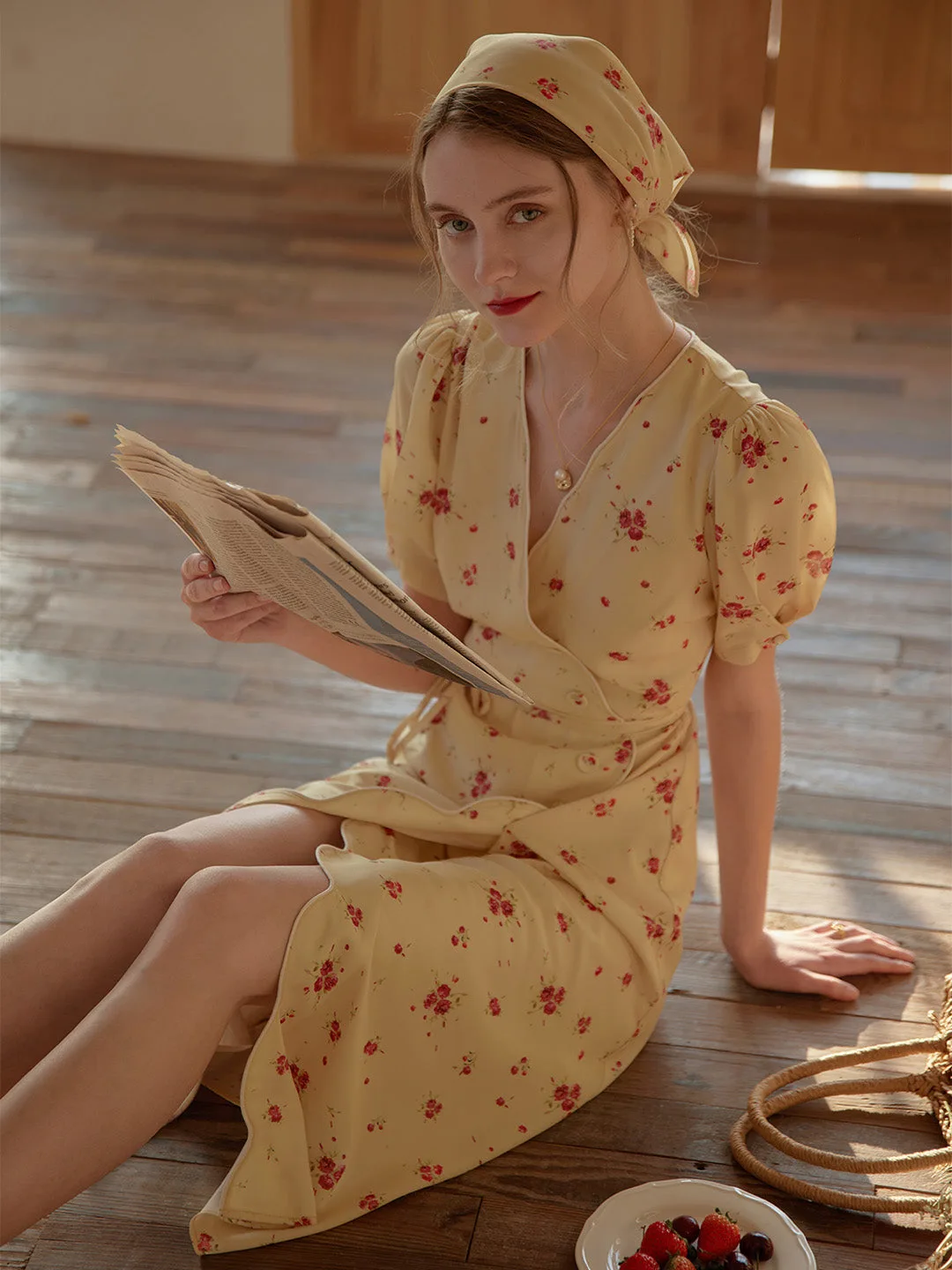
For example, the Kimura Floral-Print Midi Dress Yellow is listed in yellow. That description identifies the color, not how bold the print will look in your office lighting or whether its coverage meets your policy. Check the product images and details, then make that call in context.
Check coverage in the movements your day requires
Do not assess coverage only while standing still in front of a mirror. Bend to pick up a bag, reach forward as if using a keyboard, raise your arms and walk at a natural pace. Notice whether the neckline shifts, the skirt rides up or a sleeve pulls in a way that makes you adjust it repeatedly. If an adjustment would feel distracting in a meeting, consider a camisole or jacket only when that layer provides the coverage you need without creating a new fit problem.
Also check the dress against workplace rules for shoulders, chest and back. A layer is useful when it stays comfortably in place and meets the policy throughout the day. It is less useful if you must keep tugging it up, or if the office is warm and you would need to remove it. When the dress depends on constant correction, choose another outfit rather than treating the workday as a fitting trial.
Garments differ, and catalog information may not answer every coverage question. For a specific item, review its listed details and consult the size guide where useful; a size guide cannot confirm how a neckline will sit on you, so allow for your own movement check.
Test the hem while seated
A skirt that reaches an appropriate point while standing may shift when you sit, cross your legs or get in and out of a car. Before wearing it to work, sit in a chair similar to the one you use during the day. Sit upright and lean forward as you might over a desk. Check where the hem lands, whether the fabric pulls across your hips, and whether you can move without having to hold the skirt in place.
Repeat the check on a stair or while taking a few steps if your routine involves them. This is especially useful if the dress has a fuller skirt or a length close to your employer’s minimum. If sitting makes the hem feel too short for the written rule or your comfort, a longer option is the safer choice. A dress described as “midi” is not a guarantee of a specific hem position on every wearer.
Use a jacket for structure, not as a cover-up solution
When dresses are allowed, a simple jacket can make a floral print feel more composed by adding a clear outer line and reducing the number of competing details. A plain, close-fitting blazer or a neat, unembellished cardigan may work with a dress that already meets the dress code. Choose a layer that lets you sit, reach and move comfortably, and check that its hem and sleeves do not bunch against the dress.
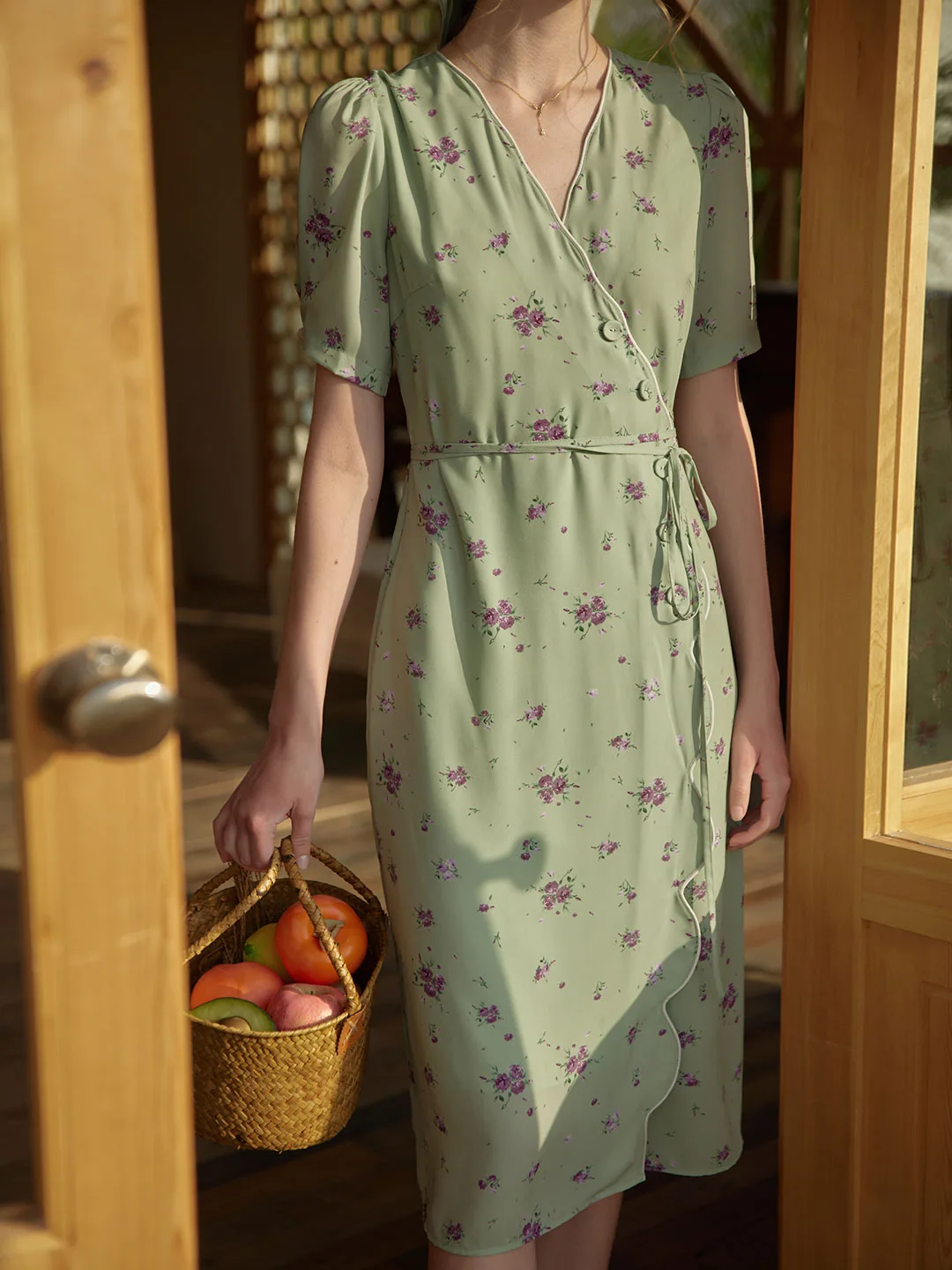
Keep the combination practical: if the dress has puff sleeves, for example, a narrow jacket sleeve may feel restrictive. The Kimura Floral-Print Rayon Midi Dress is described as having a V-neck and puff sleeves, with 100% rayon listed in the composition. Those facts may help you consider layering and care, but they do not establish how a particular jacket will fit over it. Check the garment details and try the full outfit together before a workday.
A jacket is not a fix for a dress that breaks a no-sleeveless rule if the policy expects sleeves to remain covered and you know you will remove the layer. Nor does it make a very casual shoe or an unsuitable hem compliant. Use it to finish an otherwise acceptable outfit.
Keep shoes simple and suited to your schedule
When the dress has a noticeable floral pattern, uncomplicated shoes can keep the outfit from feeling busy. Depending on your workplace, that might mean plain flats, loafers or a low heel in a color already present in the print or in a neutral shade. The goal is not to follow a fixed formula; it is to avoid adding another strong pattern or an ornate detail if the dress is already the visual focus.
Check your employer’s footwear rules and the demands of your day before choosing. A delicate shoe may be inconvenient if you walk between buildings, and a heel may not suit a long commute on foot. If your office requires closed-toe shoes or a particular level of formality, follow that requirement even if another option looks more coordinated. A simple, comfortable shoe works only when it meets the actual rule and the task.
When a dress is not suitable, keep the floral detail optional
If the policy excludes dresses, or the dress fails your coverage or seated-length check, do not force the outfit. You can keep the vintage-inspired mood with a floral blouse tucked into plain trousers or a skirt, provided those pieces meet the rules. A solid blouse with a small floral scarf or another permitted accessory offers a quieter alternative when all-over print feels too prominent. For a strict uniform or a no-print environment, skip the floral detail at work and save it for outside the office.
If you like a dress’s colors but need a more restrained work outfit, use one as a reference rather than assuming it belongs in the office. The red, yellow and light green Kimura Floral-Print Midi Dress is listed in those colors; a plain top or bottom in one compatible color could suggest a related palette without reproducing the dress. That is a styling idea, not a claim that the dress itself meets a particular employer’s standards.
Run a five-minute workday check before wearing it
Try the complete outfit at home with the shoes and jacket you expect to wear. Read the dress code beside you, then check the print from across the room, test coverage by reaching and bending, sit for a few minutes, and walk as you would during a normal day. Ask yourself: does anything shift, expose more than the rule allows or require repeated adjusting? If yes, change the layer or choose another outfit.
Finally, consider the day’s schedule. A dress that works for a routine desk day may not be practical for a presentation, an active role or a workplace with stricter client-facing expectations. If one detail remains uncertain, ask the person responsible for interpreting the policy or contact the retailer with a product-specific question through the contact page. A floral dress is a work option only when it fits both the written rules and the real movements of your day.
Explore the pieces behind the ideas
Browse our dresses for full product photographs and listed specifications. Ask our team for fit and availability, or visit wholesale partnerships if you’re buying for a boutique.