Imagine getting dressed for a lunch that might run into errands: the blouse and trousers look like they belong together, but a perfectly matched color and equally crisp fabrics make the outfit feel more formal than you intended. The fix is not necessarily a third layer or a louder accessory. Try changing one element at a time: soften the color relationship, loosen the neckline, or bring in a more tactile fabric. Then check how the trousers behave when you sit, not only when you stand in front of a mirror. These small choices give a vintage-inspired pairing a sense of intention without making it read as a uniform.
Start with a color neighbor, not a twin
For a coordinated look with some ease, choose colors that share a quality but are not identical. Cream with muted green, soft blue with warm gray, or a dusty rose blouse with brown trousers can feel connected because one shade is quiet or earthy, while the other adds a little definition. This is useful when you want the outfit to look considered but not like a matching set. If the colors have competing intensity—for instance, one very bright and one very pale—the difference may feel accidental rather than deliberate. Bring the pieces together in daylight if possible, and notice whether one color overwhelms the other. A small shift in shade is usually enough; you do not need a print or a third accent to explain the pairing.
Choose a neckline that can change the mood
A blouse neckline helps determine how polished the outfit feels, even when the trousers stay the same. A collar worn open at the top can soften a tidy trouser silhouette; a rounded or gently gathered neckline can make the pairing feel more relaxed. Think about where you are going and what feels comfortable for you, rather than treating one neckline as universally dressier. If you want a little more polish, keep the neckline neat and let the blouse sit smoothly under a jacket or cardigan. For a casual day, an open collar or a softer shape may look less composed in a useful way. The trade-off is practical: a neckline that looks lovely standing still may shift or gape when you move. Check it while turning and reaching, too.
Let one texture do the softening
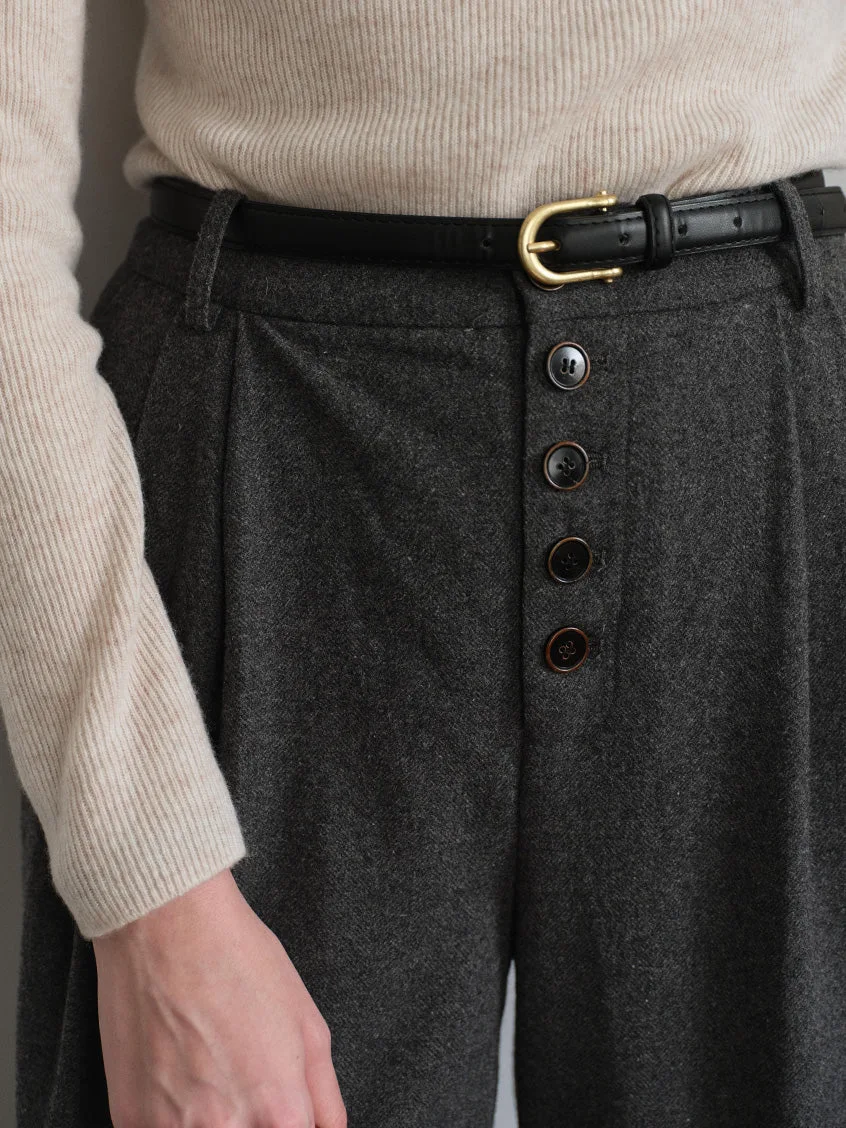
When both pieces are smooth and crisp, the outfit can look quite formal. Introducing one softer-looking texture creates contrast without requiring a dramatic color or print. A knit blouse, a brushed surface, or trousers with a more fluid visual character can make the pairing feel less rigid. Keep the other piece simpler so the textures have room to register. If both fabrics are visibly textured, the result may feel busy, particularly when the colors also contrast strongly. A product title can offer a clue, but it does not tell you every detail of the fabric’s surface or drape. For example, Anwen Wide-Leg Button-Front Wool-Blend Trousers is described as wool-blend in its title; check the listing and contact the team for composition or garment details before requesting an order. Treat that as a starting point, not a guarantee about feel.
Check the waist and leg line together
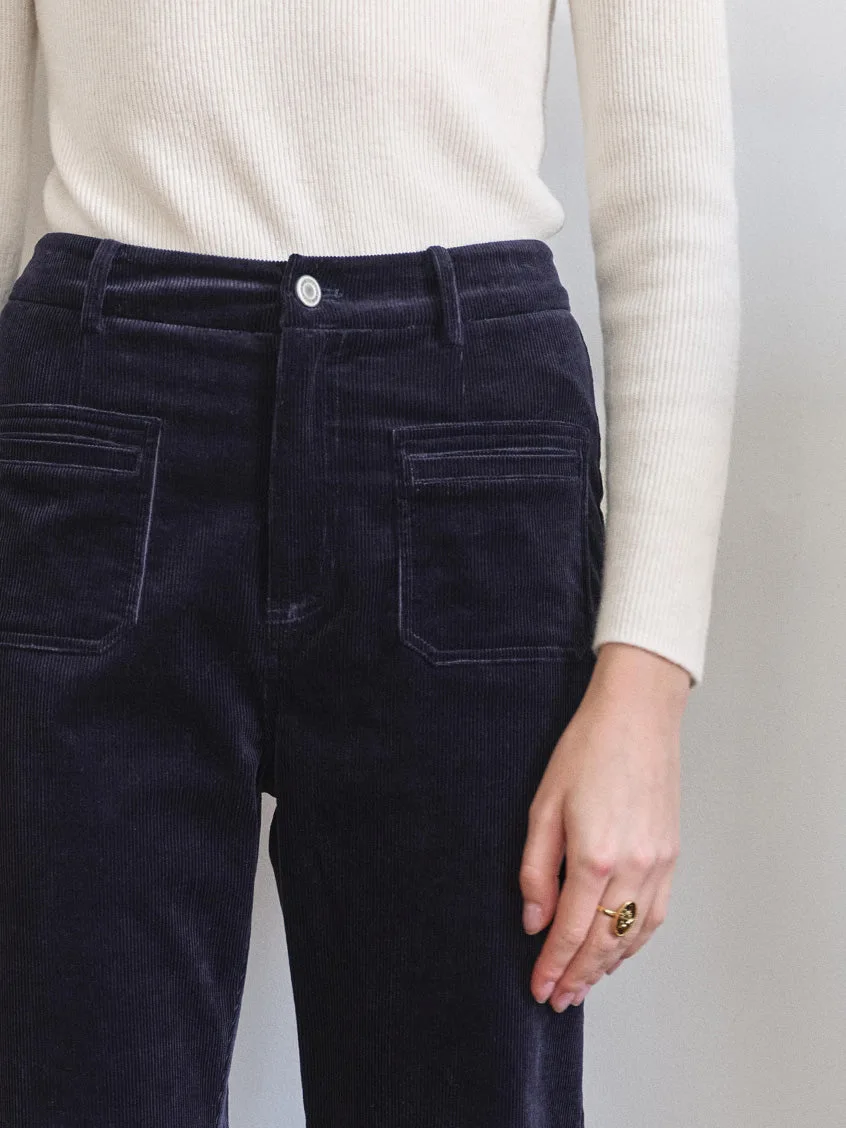
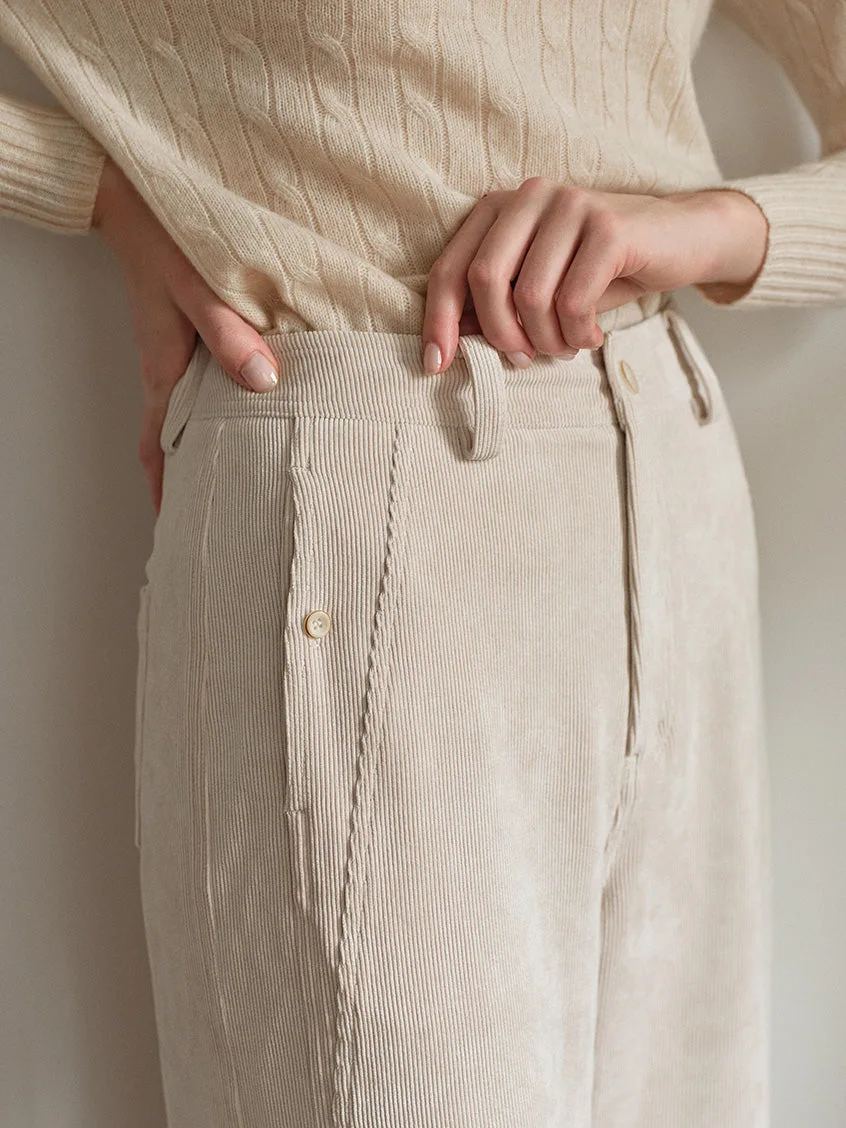
The blouse-to-trouser relationship matters as much as the colors. A full tuck gives a clear waistline, while a partial tuck can make the transition feel less precise. Leaving a blouse untucked can work when its length and shape sit comfortably over the trousers, but a long hem that bunches at the hips may add bulk or keep shifting as you move. Wide-leg trousers, such as the style shown in Ghislaine High-Waisted Wide-Leg Trousers, are one possible starting point; the listing specifies green and a high waist, but not every fit detail. Consider how much blouse fabric you want to tuck and whether the leg shape feels balanced to you. Browse the bottoms collection for other silhouettes, and review listed details rather than assuming all wide legs fit alike.
Use a seated-fit check before deciding
A trouser outfit that looks easy while standing can feel restrictive or shift around once you sit. Try this fitting exercise at home with the blouse you plan to wear: stand naturally, sit in a chair, lean forward slightly, then stand and walk a few steps. Notice whether the waistband digs in, the fabric pulls noticeably across the hips or thighs, or the hem catches under your shoe. Also check whether the blouse stays tucked—or whether it pulls in a way you dislike. These observations do not diagnose a size; they help you decide what you want from the fit. If ordering online, use the available size information and ask questions when the listing leaves something important unclear. Rustic Cottage provides a size guide, and the team can be reached through contact for product questions.
Adjust the finish for the actual setting
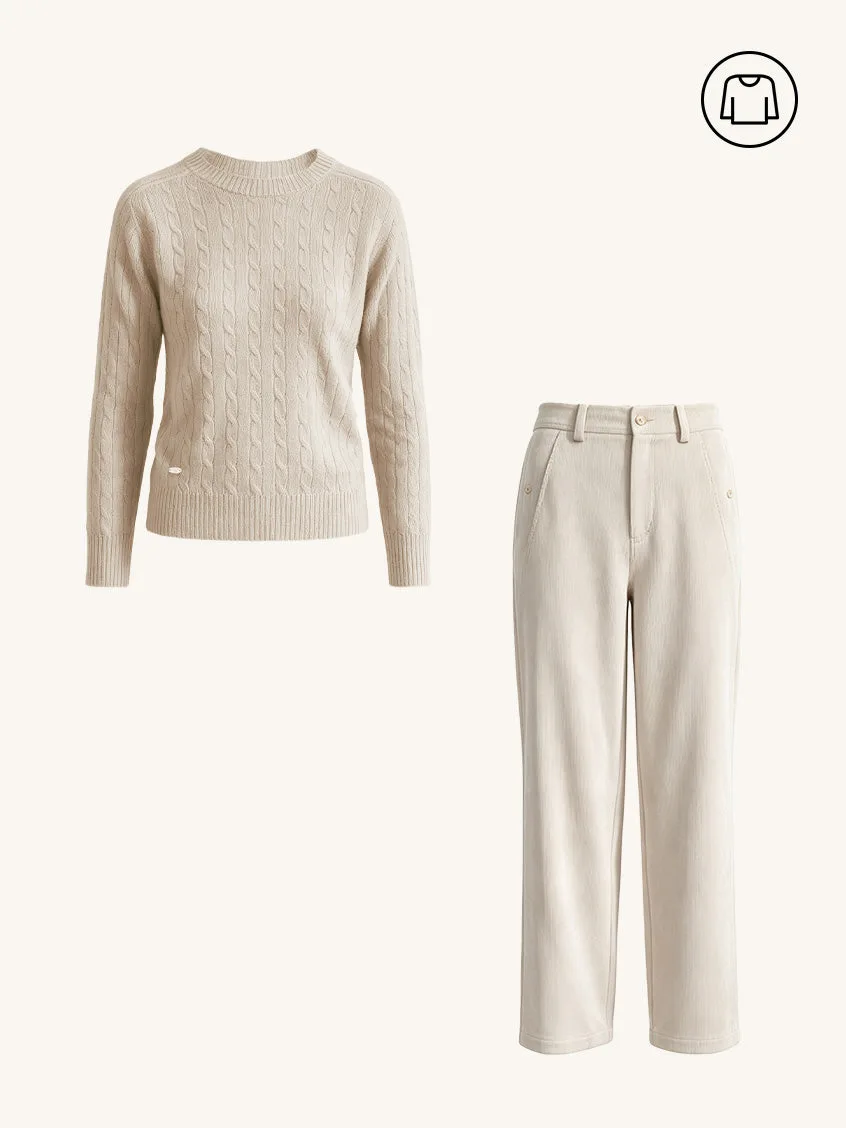
For a more polished lunch, appointment, or gathering, choose a blouse that sits neatly, keep the color contrast restrained, and make sure the trousers’ length works with the shoes you plan to wear. A clean tuck or an open layer can give the outfit definition without making it a matching set. For a relaxed day, let one choice loosen: wear the blouse untucked if its hem works with the rise, choose a less formal neckline, or use a more tactile piece. These are styling options, not rules about what any setting requires. The important trade-off is comfort versus neatness: a very relaxed blouse may shift, while a tightly tucked one may need readjusting when you sit. If you want to compare coordinated separates with a single-piece option, the Shay and Ghislaine set lists a wool-cashmere sweater and wide-leg trousers; check its care information before considering it.
Make a two-minute outfit decision
Before you leave, look at the outfit in a full-length mirror and ask three practical questions: Do the colors relate without matching too closely? Can you move your neck and shoulders comfortably in the blouse? Do the trousers feel acceptable both standing and seated? If one answer is no, change only that element first. A different blouse neckline may solve a fussy feeling; a lighter color contrast may soften the whole combination; a different tuck may keep the hem from bunching. Finally, sit once more in the shoes you intend to wear and check the trouser hem. This small routine is more useful than adding accessories by default because it identifies what is actually bothering you. Keep the combination when it feels comfortable and fits the occasion you have in mind, not because every piece matches perfectly.
Explore the pieces behind the ideas
Browse our skirts & bottoms for full product photographs and listed specifications. Ask our team for fit and availability, or visit wholesale partnerships if you’re buying for a boutique.