Suppose you are getting dressed for a casual lunch and the cardigan you planned to layer over a blouse looks neat buttoned on its own. Before you reach for your shoes, pause: the neckline might shift when you lean forward, or the buttons may pull when you sit. Wearing a cardigan as a top can be a useful outfit option, but it depends on the particular knit, its coverage, and what you need to do that day. Treat it as a fit decision, not a rule that every cardigan should work this way.
This checklist helps you decide whether a specific cardigan is comfortable and secure enough to wear alone, whether a discreet underlayer would help, or whether it is better used open over a separate top. A polished look is not worth constant readjusting.
1. Check the button line before judging the outfit
Start by buttoning the cardigan the way you would actually wear it. Look at the spaces between buttons in bright, even light. A gap that opens enough to show the layer underneath, or your skin, is a sign that the front is under strain. Check especially around the fullest part of the chest and near the waist, where bending or reaching can change how the fabric sits.
Try smoothing the front once, then let your arms rest naturally. If the button bands separate again, do not count on keeping them closed by pulling the panels into place. A different size may be worth considering if the garment otherwise suits you, but changing size can also affect sleeve length and overall shape. Consult the garment's listed measurements and the size guide rather than assuming a larger size will solve every fit issue.
Not every opening is a problem. A small, stable gap at the bottom might be hidden by a high-rise skirt or trousers, if the cardigan remains secure through movement. But a gap near the bust is harder to manage discreetly. If you find yourself repeatedly pressing the button bands together, wear a separate top underneath or choose another piece.
2. See how much the neckline reveals
Stand naturally and check the neckline from the front and sides. With a V-neck, note where the opening ends and whether it leaves enough coverage for the setting. A round neckline can feel more covered, but its shape alone does not guarantee that it will stay in place. The shoulders, button closure, and movement all matter.
Next, bend forward as if picking up a bag from the floor, then turn your head and reach one arm across your body. These small movements show whether the neckline shifts or exposes more than you intended. If it does, a camisole or fitted tee can provide a comfortable buffer. Choose an underlayer whose neckline sits neatly below or alongside the cardigan opening; a contrasting edge can be an intentional detail, while a closely matching shade tends to be less noticeable.
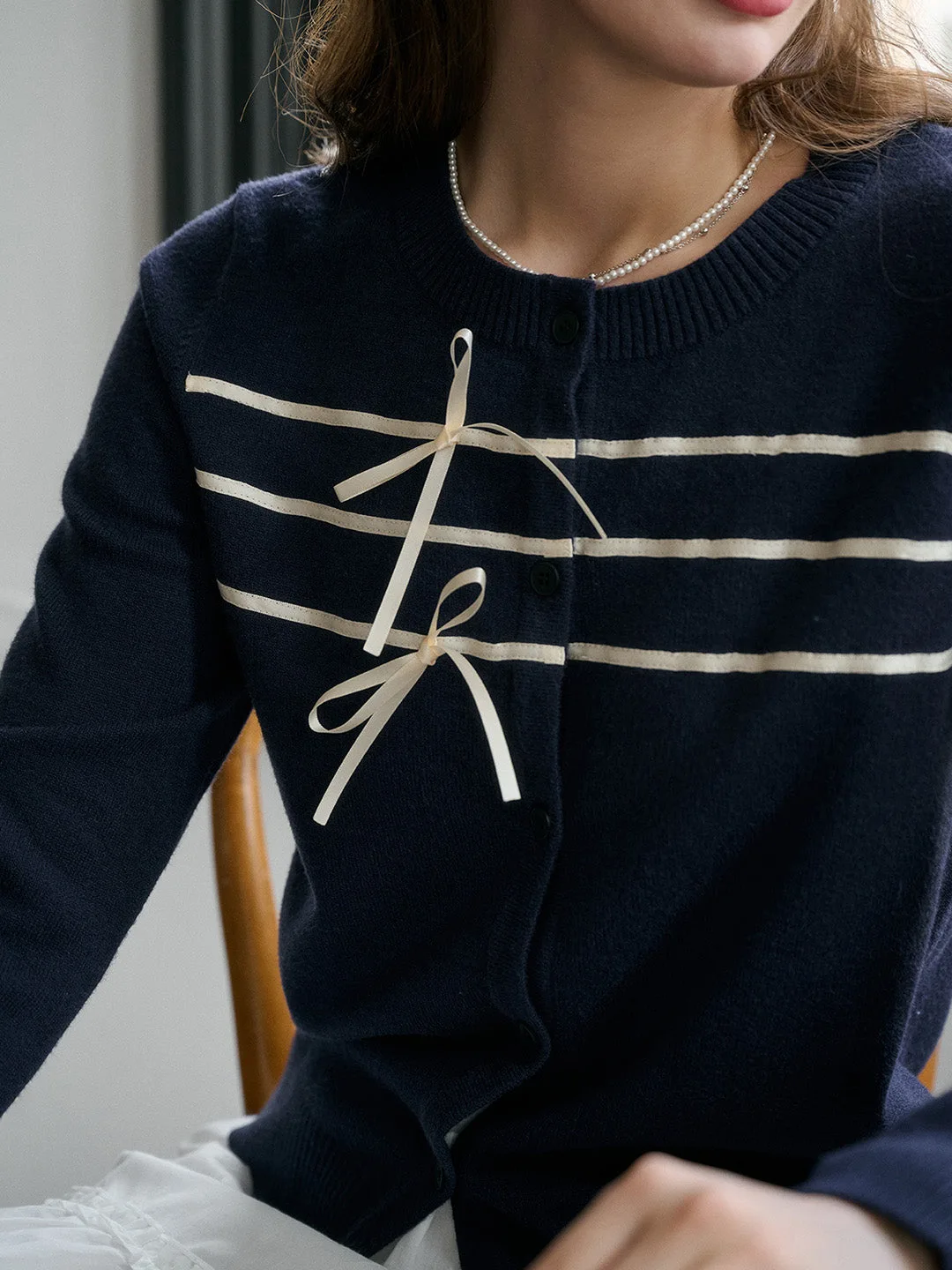
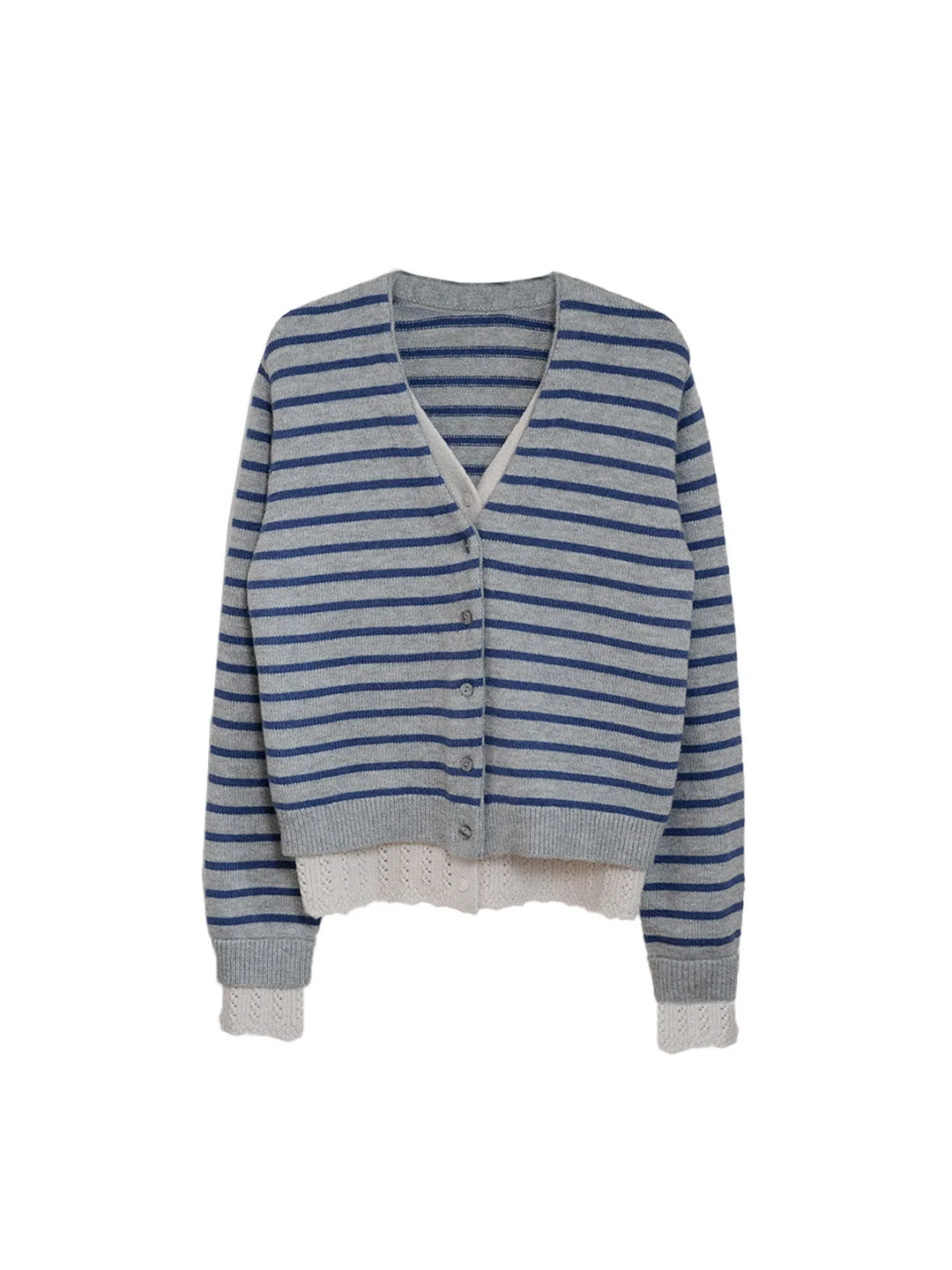
For a concrete comparison, the Frankie V-Neck Stripe Wool Cardigan is described as having a V-neck and a regular fit. Those details identify its neckline and listed fit, but they do not tell you how much coverage it will provide on your body. Check the actual garment information and your own movement rather than treating the product description as a promise that it can be worn alone.
3. Do the sitting test, not just the mirror check
A cardigan can look composed while you stand and feel restrictive as soon as you sit. Button it, sit in the kind of chair you are likely to use, and rest your arms as you would during a meal or at a desk. Check whether the front pulls across the chest or waist, whether the hem rides up, and whether the neckline shifts when your shoulders move forward.
Then lean forward slightly and reach toward a tabletop. The goal is not to force a dramatic stretch; it is to notice ordinary motion. If the buttons gape, the knit strains, or you feel you must hold your posture unnaturally to keep covered, it is not a reliable top for that occasion. An underlayer can address a coverage concern, but it cannot make a tight cardigan more comfortable.
Repeat the check with your intended bottom. A cardigan tucked into a skirt may bunch when you sit, while a hem worn outside can lift or catch at the waistband. Either can work if it stays comfortable, but test the exact combination rather than judging the pieces separately.
4. Choose an underlayer for the problem you need to solve
An underlayer is not automatically necessary, and adding one does not fix every fit issue. Decide what you want it to do. A camisole may add coverage at the neckline or through a button gap without much bulk. A fitted tee can provide more coverage at the shoulders and chest, though its neckline may show above the cardigan. A thin, smooth layer can be easier under a close-fitting knit than a bulky top with seams or trim.
Check the underlayer from the front, sides, and back. Does it stay in place when you reach? Does its hem show below the cardigan in a way you like? Does the added layer make the buttons pull more? If it creates new strain, try a lighter or less bulky option, wear the cardigan open instead, or save that pairing for another use.
Color is a practical choice too. A similar color can reduce visual contrast where the cardigan opens. A deliberate contrast can look considered, but it will make the layer more visible. Neither approach is inherently better; choose based on how much of the underlayer you want to show and what feels appropriate for your plans.
5. Respect the knit's stretch—and the limits of the label
Do not assume that a cardigan will stretch comfortably just because it is knitwear. Fibers, construction, and garment shape differ, and a little give in the fabric does not mean it is designed to fit closely across the body. Avoid sizing down simply to get a snug, top-like silhouette unless the garment information supports that choice and the fit remains comfortable.
The Frankie V-Neck Stripe Wool Cardigan listing identifies its fabric as non-stretch. That is a useful caution against relying on give to compensate for tightness; it is not a substitute for checking the fit or a guarantee about how the cardigan will sit on you. More generally, stop if you see buttons pulling, horizontal tension lines, or a hem that rides up during ordinary movement. Knit fabric should not have to work under constant strain for the outfit to succeed.
If you are comparing options, browse Rustic Cottage knitwear and review each item’s listed details. Product descriptions can help you compare what is specified, but they may not answer how a particular buttoned style behaves as a stand-alone top. When a construction detail or fit point is unclear, you can ask Rustic Cottage a question before deciding.
6. Check button placement and how you plan to wear it
Button spacing affects how the front closes. A cardigan with more buttons may offer more points of closure, but that alone does not prevent gaping; the distance between closures and the fit through the body still matter. Button material or decorative details are style information, not evidence that a closure will feel secure under tension.
Think about the outfit's shape, too. A cardigan worn untucked over a skirt or trousers may provide more coverage at the waist than one tucked in, but the longer hem can bunch when seated. Tucking may create a clean line, yet it places more fabric at the waistband and can pull the button band. Try both approaches while sitting and standing, and choose the one that stays settled without forcing the knit.
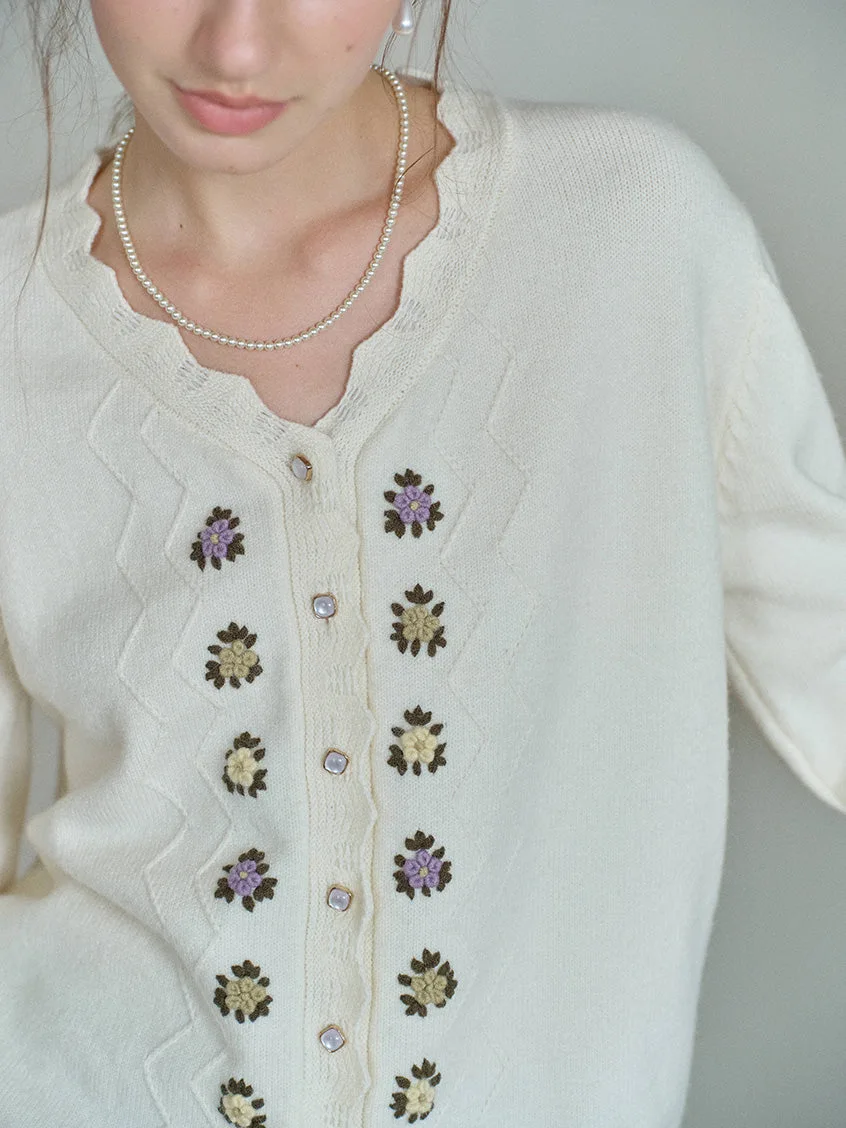
For a softer, layered look, a cardigan worn open over a camisole or blouse remains a perfectly good choice. A button-front style such as the Lusa V-Neck Tie Waist Floral Embroidery Knit Cardigan is listed with a round neckline and button detail. Those listed details do not establish its stretch or suitability as a stand-alone top, so assess its closure, neckline, and movement individually.
7. Make a quick decision with a three-minute fitting exercise
Before wearing a cardigan alone for a full day, set aside a few minutes in the complete outfit. Button it, check the front in good light, and take a photo from straight on and at a slight angle if that helps you see gaps. Then sit, reach forward, and raise your arms as you would during an ordinary task. Finally, repeat the sequence with your chosen underlayer, if you plan to wear one.
Use these three questions to make the call:
- Do the buttons stay closed without visible strain during normal movement?
- Does the neckline provide the coverage you want while standing, sitting, and leaning?
- Can you move and sit comfortably without adjusting the cardigan every few minutes?
If the answer to all three is yes, wearing it as a top may suit your plans. If the issue is coverage alone, try a suitable underlayer and repeat the checks. If the buttons pull or movement feels restricted, wear the cardigan open over a separate top instead. That small change keeps the outfit useful without asking a knit to do a job its fit may not support.
Explore the pieces behind the ideas
Browse our knitwear for full product photographs and listed specifications. Ask our team for fit and availability, or visit wholesale partnerships if you’re buying for a boutique.