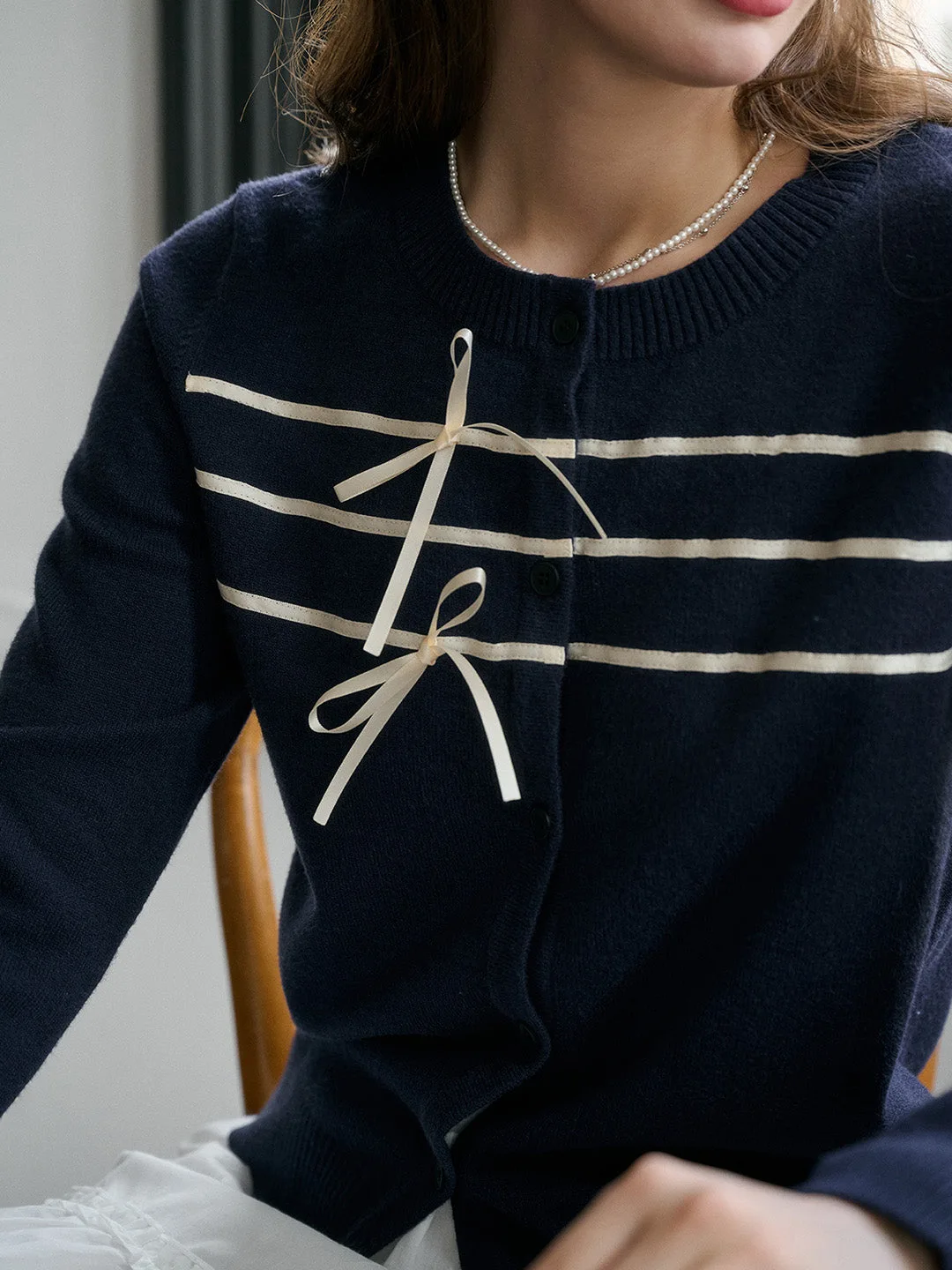
Imagine leaving home for a four-hour train ride in a blouse and skirt, with a change of trains and a few hours at your destination before checking in. The cardigan you reach for needs to feel comfortable while you sit, stay manageable when you stand, and fit into your bag if the carriage feels warmer than expected. A quick mirror check alone will not answer all of that.
For a long journey, think of the cardigan as a seated garment first and an outfit accent second. A pretty neckline or vintage-inspired detail can still matter, but the practical questions are specific: Do the cuffs stay clear of your hands? Does the back still cover what you want covered when you sit? Can you fasten it without a button landing awkwardly at your waist? Work through those checks before deciding what to pack.
Plan around the actual route
Start with a simple itinerary rather than an idealized travel outfit. For example, picture wearing the cardigan over a lightweight top from home to the station, keeping it on during the train ride, then carrying it while you walk to lunch. If you are driving instead, imagine sitting with a seat belt across your torso and reaching toward a bag or the passenger-side door. These small differences change which details deserve attention.
Choose the layer you can use in more than one part of the day. If you expect to keep it on for most of the trip, prioritize ease of movement and a comfortable closure. If you mainly want it for brief periods in a cool-feeling indoor space, packing bulk and how easily it comes off may matter more. Browse the knitwear collection for options, then compare their listed details with your route and outfit rather than choosing by appearance alone.
Check sleeves with your hands in motion
Sleeves that seem fine while standing can drift over the hands when you sit or bend your elbows. That can get in the way when you are holding a book, using a phone, opening a snack, or handling a ticket. Before packing, put on the top you plan to wear underneath and try the cardigan with your arms relaxed, elbows bent, and hands held out as if you were reading or typing.
Notice whether the cuffs stay where you want them without repeated tugging. Also try reaching forward as you would to pick up a bag. A sleeve that feels comfortable in a still pose may pull across the upper arm or bunch at the elbow when you reach. If the cuffs cover your fingers in the position you expect to use most, consider a different layer or outfit combination. Do not assume you can roll the sleeves: some cuffs may not stay put, and rolling can change the look or feel.
Check the back while seated
Back length is easy to judge in front of a mirror and harder to judge from a standing photo. Sit on a firm chair in the same trousers or skirt you would wear for travel. Let your shoulders rest naturally, then lean forward slightly as if reading a screen. Notice where the cardigan hem lands and whether it rides up, bunches behind you, or leaves more of your top exposed than you prefer.
Repeat the check with the bottom you intend to wear. A shorter hem may work neatly with a high-waisted skirt, while a longer layer may offer more coverage over trousers; neither is automatically the better travel choice. The useful question is whether the hem stays comfortable and looks intentional in your usual seated posture. If you plan to wear the cardigan open, check that too: an open front may shift as you move, so see whether you are content to adjust it occasionally.
Place buttons against your waistline
Buttons can help keep a cardigan in place, but their position matters when you are seated. Fasten it over your planned top and bottom, then sit down. Look at where the closed buttons meet your waistline and where the fabric folds when you bend. If a button sits directly where your waistband presses or the fabric strains when you sit, wearing the cardigan open or leaving that button undone may be more comfortable.
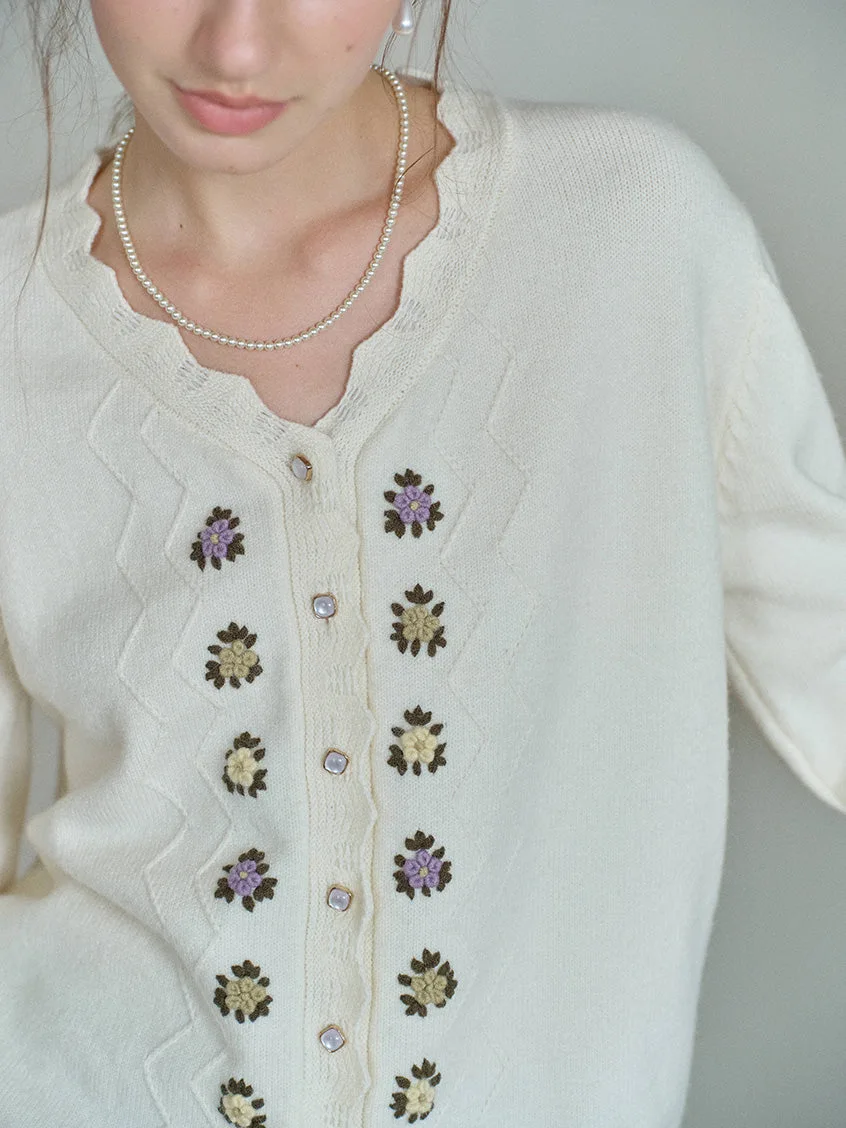
Try the same check with the cardigan open, partly fastened, and fully fastened. This gives you several ways to adjust without assuming that one closure style will work for every part of the journey. For a front-button example to inspect, the Lusa V-Neck Tie Waist Floral Embroidery Knit Cardigan is listed with button details. Its product description gives the color, neckline, composition, and care instructions, but does not specify button spacing or seated fit. Check the product photographs and listed sizing rather than inferring those details from the title.
Choose a layer for temperature changes
On a long trip, you may move between a platform, carriage, station, car, and indoor destination, each with a different feel. A cardigan that is simple to remove and put back on gives you options without requiring a complete outfit change. Consider what you will wear under it: a lighter top makes the layer easier to adjust than a bulky combination that feels restrictive once the cardigan is buttoned.
There is a trade-off between a more substantial-looking knit and a layer that takes little space in a tote. Since product descriptions do not always state how a garment feels or packs, avoid assuming that a particular knit will be warm, lightweight, or compact from its appearance. If those qualities are important, review the available product information and ask the retailer about details that are not listed. The Aadhya French V-Neck Floral Knit Cardigan, for instance, is described as a cream-colored V-neck with floral and ruffle details and a listed fiber composition. Its description does not provide a garment weight, so do not rely on the photos to answer that question.
Pack it to suit the seat and the bag
Decide before departure whether you expect to wear the cardigan or carry it. If it will be on your body, try your complete outfit while sitting and check that the layer does not interfere with anything you need to reach. If it will go in a bag, check that it fits without crowding the items you need during the ride. A cardigan with prominent details may be better placed where it will not be pressed against objects that could catch on them; follow the garment’s own care and handling guidance rather than assuming every knit tolerates the same treatment.
For a car trip, consider where the cardigan will be when you are seated and whether you can take it off without disrupting the rest of your outfit. For train travel, consider whether you want it on your lap, in a tote, or within reach in an overhead bag. Those are planning preferences, not guarantees about a particular seat or storage space. If the bag is already full, wearing the cardigan may be more practical; if you expect to remove it often, keeping it accessible may save fuss.
Build one outfit and rehearse the fit
Make a small, useful rehearsal at home: put on the intended top, bottom, and cardigan, then sit for several minutes while doing ordinary seated tasks. Reach for a mug, hold a phone, cross and uncross your legs, and stand up again. Check sleeves, back coverage, waist buttons, and whether the cardigan is easy to open or remove. This is not a test of how the garment will perform on a specific journey; it is a way to notice personal preferences before you pack.
Now decide what you would change if one detail bothers you. A different top may reduce bulk at the arms; wearing the cardigan open may ease pressure at the waist; another bottom may make the hem feel more comfortable when seated. If you are comparing sizes online, use the retailer’s size guide and available garment information, and contact the team through the contact page if a measurement or material detail you need is not provided. Do not treat a size chart as a promise about how the garment will feel in your preferred seated position.
Make the final packing choice
Before you leave, choose the cardigan that passes your own seated checks, not simply the one that looks best standing up. Confirm that the sleeves leave your hands usable, the back hem lands where you prefer, and the closure feels comfortable over your chosen outfit. Then decide whether it travels on your body or in your bag, based on how often you expect to adjust it and how much room you have.
If no option meets every preference, prioritize the detail that would bother you most over several hours. You might accept a hem that shifts slightly if the sleeves stay clear, or choose an open-front styling if button placement feels awkward. A realistic plan leaves room for that trade-off—and makes the cardigan a considered part of the journey rather than one more thing to manage.
Explore the pieces behind the ideas
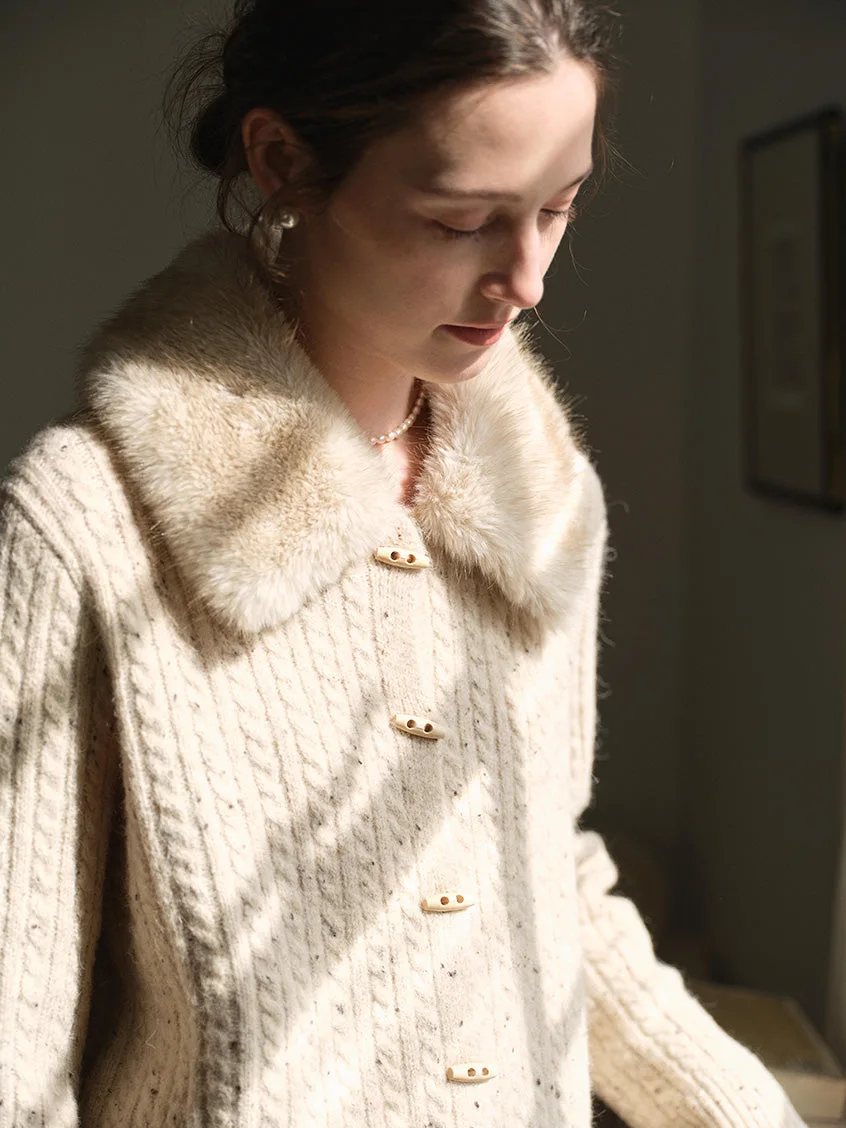
Browse our knitwear for full product photographs and listed specifications. Ask our team for fit and availability, or visit wholesale partnerships if you’re buying for a boutique.