Imagine you have errands across town, a few blocks between stops, and stairs at the train station. A long skirt might suit the day, but only if you can walk at your usual pace without gathering fabric or watching every step. Before choosing an outfit, think beyond the mirror: hem clearance, stride room, shoe shape and the day’s surfaces all affect whether a skirt feels practical on foot. These checks can help you make a more deliberate choice from your closet or while browsing skirts and other bottoms.
Start with the route, not the outfit photo
Picture the places you expect to walk: smooth sidewalks, crowded shops, a steep curb, outdoor paths or a flight of stairs. A route with frequent stops and turns asks more of a skirt than a short, steady walk on even pavement. If your day includes stairs or getting in and out of a car, you will want to test those movements before leaving rather than judge the outfit while standing still.
Consider how much attention you are willing to give your clothes. If you would rather keep your hands free, a skirt that needs regular lifting or adjusting may be a poor match for this particular plan. That does not make the skirt unsuitable in general; it may simply work better for a shorter outing or a route with fewer obstacles. Let the day’s demands set the standard, not a styled photograph taken in a stationary pose.
Check hem clearance with your actual shoes
Hem length is most useful when assessed with the shoes you plan to wear. Put them on, stand naturally and check whether the skirt clears the front and sides of each shoe. Then walk several steps. A hem that brushes the floor, catches near the toe or drops over part of the sole can become distracting, especially when you change pace or direction. A shorter shoe does not automatically solve the issue if the hem still trails behind your heel.
Make the check in the light and on the floor where you can see the fabric. If a skirt is close to the ground in bare feet, repeat the check in the footwear you expect to use; a different sole height can change the clearance. Do not rely on pinning, holding or lifting the skirt for the mirror check. Those adjustments can disguise a length problem that will matter once both hands are occupied.
Test steps, turns and a natural stride
Try a small movement circuit at home: walk across the room, turn around, step onto a low stair and sit down and stand up again. Notice whether the skirt lets you take your ordinary step without pulling at the waistband, twisting around your legs or requiring a shorter stride. If you need to gather fabric to climb a step, decide whether that is acceptable for the route you have planned. A brief fit check cannot predict every situation, but it can reveal obvious restrictions.
Do not assume a skirt has a slit, pockets or any other unlisted feature. Check the garment itself, and assess movement as it is. For an online option, review the available description and sizing information, then use the size guide as one part of your decision. Measurements can help with fit questions, but a written size chart cannot show how freely a particular skirt will move on your body.
Think about modest movement ease
Movement comfort is personal. Some people prefer fabric that stays close to the legs; others want more room when climbing stairs or sitting. As you walk, check whether the skirt shifts in a way that makes you feel exposed or makes you want to keep adjusting it. Try the movements that are likely during your day, including stepping up and sitting on a chair, in a private space where you can assess coverage comfortably.
If you find yourself taking unusually small steps to manage the skirt, that is useful information. You might choose another skirt with more movement room, or save this one for an outing with fewer stairs and less walking. Do not count on a particular construction detail unless it is clearly present on the garment. The goal is not to meet a universal standard of modesty; it is to choose coverage and freedom of movement that feel right to you.
Match the shoe profile to the walking surface
Shoe shape affects how a long hem behaves. A narrow or pointed front can be easier to catch with fabric that falls close to the foot, while a wider profile may alter the way the hem sits around your shoes. A thicker sole can add clearance, but it may also change how securely you move on uneven ground. Try the shoes with the skirt and walk on a surface similar to the one you expect, if practical.
For a route with cracked pavement or grass, prioritize a shoe you can walk steadily in rather than choosing solely for how it looks beside the skirt. On a dry, smooth indoor route, you may have more flexibility. If your shoes feel unstable or the hem keeps touching them, reconsider the pairing rather than assuming you will adapt over a full day. The best profile is the one that gives you dependable footing and keeps fabric clear as you move.
Use the forecast to make a realistic call
Weather can change the demands of a long skirt. Wind may lift or shift fabric, while wet ground can make a low hem harder to keep clean and dry. On a rainy day, a skirt that already sits near the ground may be an inconvenient choice, even with shoes that add height. For a breezy route, check how the skirt moves outdoors if you can do so safely, and consider whether you are comfortable managing that movement.
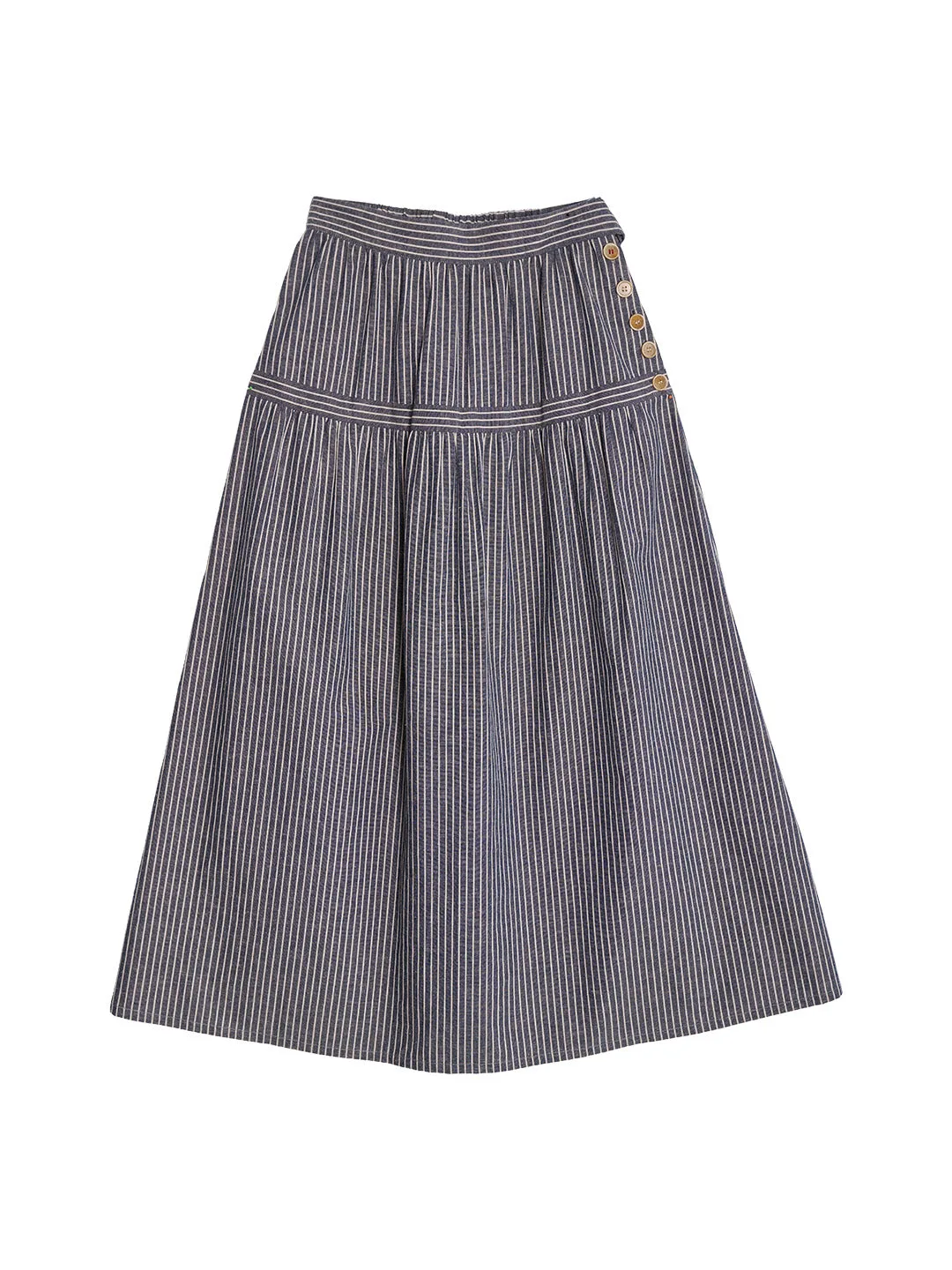
Fabric details can help you compare options, but they do not establish how a garment will handle a specific forecast. For example, the Whitney Striped Maxi Skirt is listed as 55% linen and 45% cotton, with a non-stretch construction. That information may help you consider composition and movement, but it does not tell you its hem clearance on your body or how it will behave in wind or rain. Check the garment and its sewn care label rather than assuming weather performance.
Do a five-minute departure check
Before you commit to the outfit, wear the skirt with your intended top, shoes and any layer you expect to carry or wear. Walk at your normal pace for a minute, turn both ways, use a step and sit down. Look at the hem again after moving: has it shifted, caught or become difficult to manage? If you have to keep changing your stride, test another shoe or choose a different skirt. A few minutes now can spare you a day of constant adjustment.
When comparing styles, the Winter Light Lyocell Maxi Skirt is listed as 82% lyocell and 18% polyester; that composition alone cannot answer movement or weather questions. Treat product details as starting points, not promises about your route. If an online listing leaves an important fit question unanswered, you can contact Rustic Cottage before requesting an order. Choose the skirt that clears your shoes, allows your usual steps and suits the conditions you expect—not simply the one that looks longest or most polished while standing still.
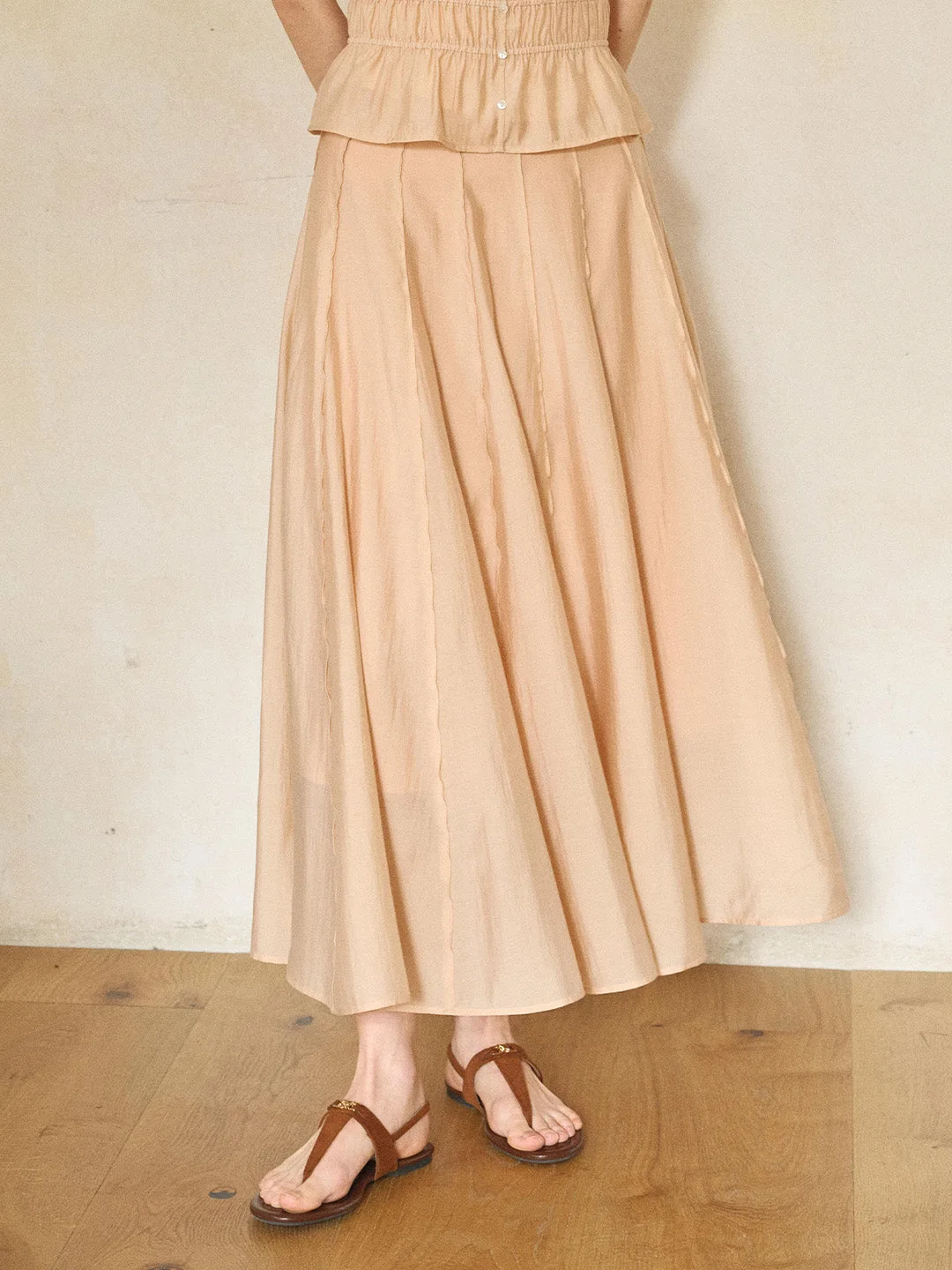
Explore the pieces behind the ideas
Browse our skirts & bottoms for full product photographs and listed specifications. Ask our team for fit and availability, or visit wholesale partnerships if you’re buying for a boutique.