Imagine finding two sizes of vintage-inspired trousers that both look promising, but the size chart leaves you unsure which one to request. A pair already in your closet can offer a useful reference—provided you compare the same points on both garments. The goal is not to discover a universal size or predict an exact fit from four numbers. It is to see whether a candidate garment is more or less roomy, higher or lower, or longer or shorter than a pair you know.
Use a flexible tape measure, a flat surface and a pair of trousers similar in cut and fabric behavior to the ones you are considering. Keep notes in inches, label every measurement, and remember that garment measurements describe the garment—not your body.
Set up both pairs for a fair comparison
Choose trousers that fit in a way you would like to repeat. A pair with a similar rise and leg shape is a more informative reference than, for example, comparing close-fitting pants with wide-leg trousers. Similar fabric behavior matters, too: a firm woven pair and a garment with stretch may feel different even when their measurements look alike.
Fasten the reference pair as you normally wear it, empty the pockets, and lay it flat without pulling the fabric. Smooth wrinkles gently rather than stretching seams or pressing the garment into an artificial shape. Use the same surface and method when measuring a second pair or reading an available garment chart. If you are browsing Rustic Cottage bottoms, check whether a listing supplies garment measurements; do not assume every style follows one shared size chart.
Measure the flat waist, then label what the number means
Align the waistband so its top edge lies straight, and measure from one side edge to the other across the front. Keep the tape level and do not tug the waistband taut. This is a flat waist measurement: it is the width across the garment, not the full distance around it.
That distinction explains why a chart may show a waist number that seems much smaller than expected. If a waistband is measured flat across a straight line, doubling that width gives an approximate circumference. For example, a flat width of 15 inches corresponds to about 30 inches around when measured in this simple way. But a curved or shaped waistband, gathers, overlap, or closure construction can make doubling less exact. Record your result as “flat waist” and compare it with another flat measurement—not with a body circumference unless the chart explicitly gives comparable body sizing.
Choose one hip point and repeat it exactly
Hip measurements are easy to miscompare because people may measure at different heights. On the reference trousers, find the fullest area across the seat and note its distance below the top of the waistband. Measure straight across the garment at that level, keeping the front and back layers smooth and aligned. Write both details together, such as “flat hip, 8 inches below waistband,” rather than recording a number with no location.
For the candidate pair, use that same distance from its waistband. If its shape or rise makes that point land somewhere unlike the fullest part of the seat, note the mismatch instead of treating the numbers as directly equivalent. A difference may reflect pattern shape as well as room. Doubling the flat width can provide an approximate circumference, but it cannot describe how the fabric distributes ease around the body. Use this as a relative check between similar trousers, not a promise of fit.
Find the front rise from seam to waistband
Lay the trousers front side up and identify where the front crotch seams meet. Measure from that seam intersection to the top edge of the front waistband, following the front rise line. Keep the tape against the garment without stretching it. Avoid measuring from the back seam or from the bottom of the crotch curve; those are different paths and will produce different figures.
Compare front rise with front rise, especially when the reference pair feels comfortable at the waist and crotch. A candidate with a shorter rise may sit differently on you; a longer one may place the waistband higher, but the amount and sensation depend on the cut and your preferred wearing position. This number is a useful clue, not a verdict. If the trousers you like are high-waisted, a similar rise is usually a more relevant starting point than the waist number alone. For a listing without clear measurements, you can ask through Rustic Cottage’s contact page whether garment details are available.
Measure inseam along the inside leg
With the trousers laid flat, follow the inside leg seam from the crotch seam intersection down to the hem. Keep the tape along the seam rather than drawing a straight diagonal across the leg. Record the result as the inseam. Do not substitute the outside leg length: that measurement starts near the waistband and includes the rise.
Compare inseams when you want to judge relative length, but account for how you plan to wear the trousers. A pair worn with flats may be a more useful reference for another pair intended for flats than trousers usually worn with a heel. Leg shape can also affect how a hem hangs, so equal inseams do not guarantee identical-looking lengths. If your reference pair has been hemmed, its inseam describes its current state—not the original length of its style. That is still valuable if you want a similar finished length, as long as you make the alteration history part of your note.
Build a four-number comparison, not a size conversion
Make a small note with four labeled measurements for your reference pair and the candidate: flat waist, flat hip at the same point, front rise and inseam. Add the reference pair’s cut, fabric feel, usual wearing position and whether it has been altered. Then compare each number separately. A waist that is wider may offer more room at that edge, while a shorter inseam may place the hem higher; neither difference tells you by itself how the whole garment will feel.
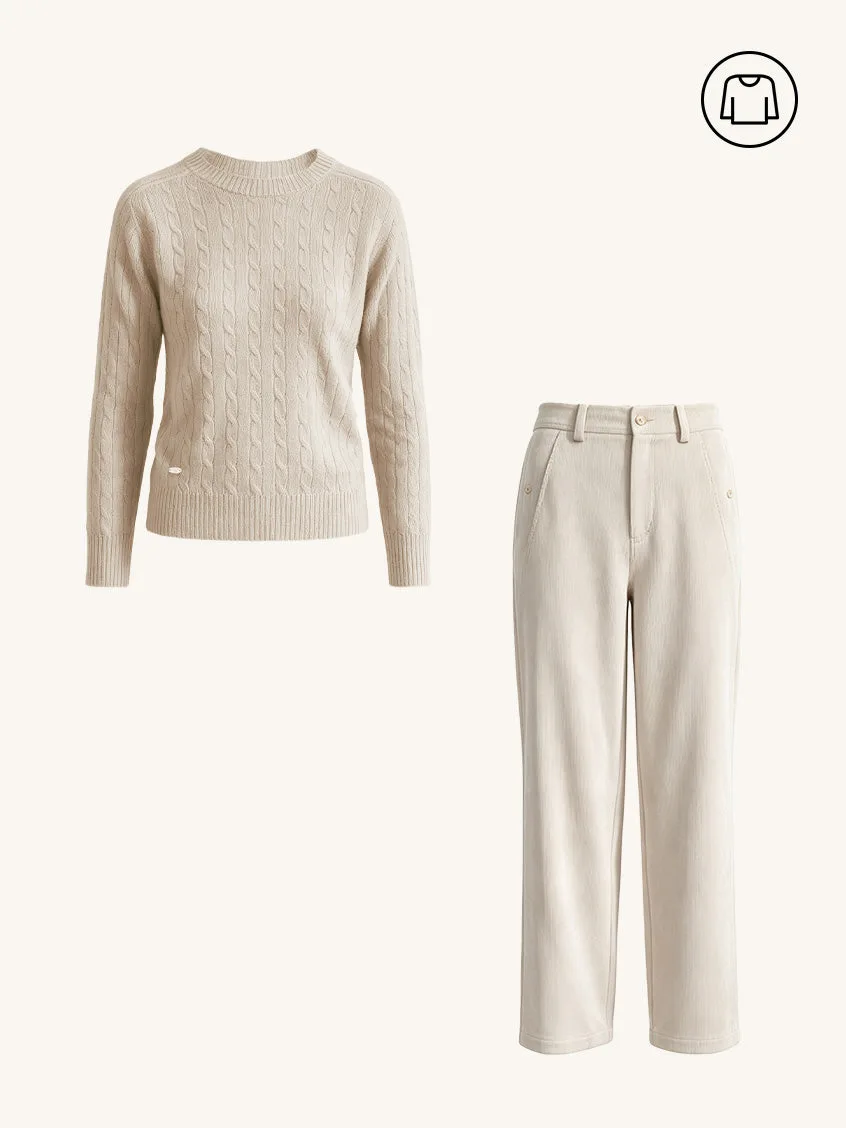
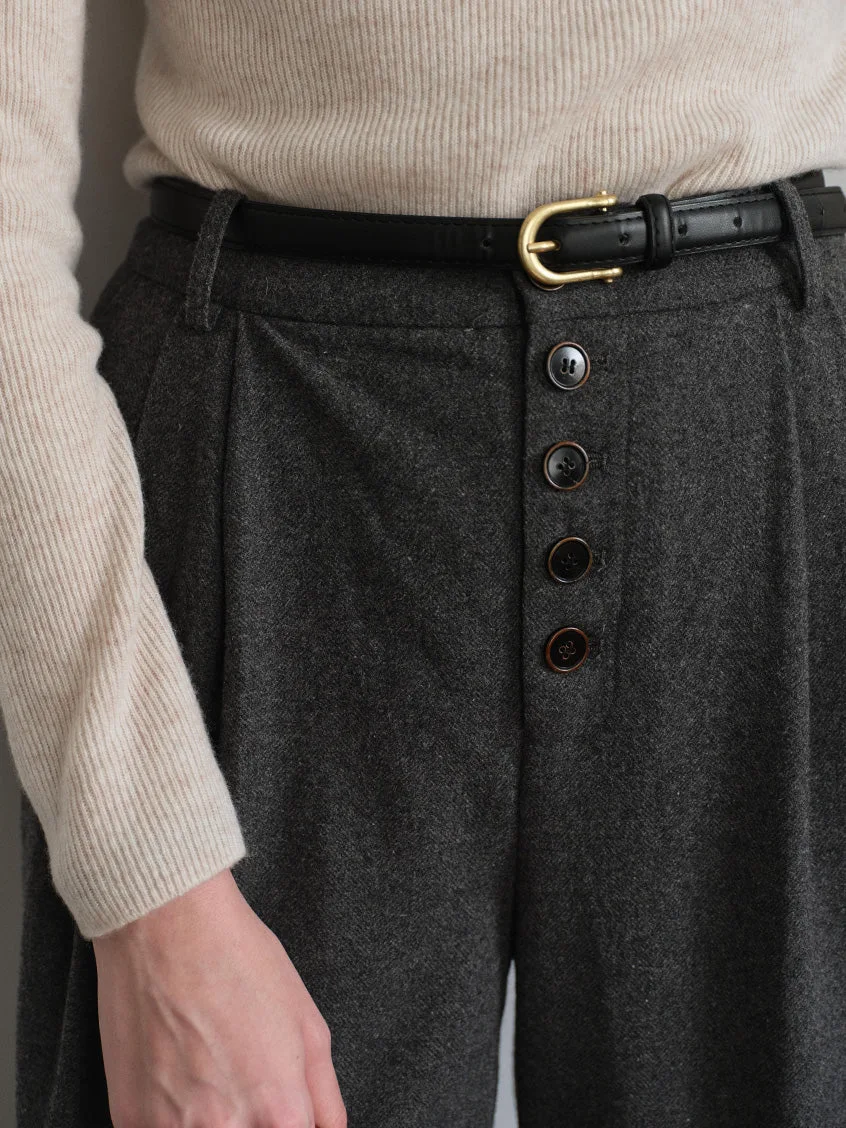
Do not compare a garment’s flat width with a chart’s full circumference, or a garment chart with body measurements, as though they were the same kind of number. Also avoid treating a size label as a conversion between brands or styles. A size guide can explain what a particular chart represents, while a product page such as Ghislaine High-Waisted Wide-Leg Trousers is a place to review the listed information for that specific garment. Do not infer unlisted dimensions from its title.
Try a quick reference-pair check before deciding
Lay your reference trousers flat and measure all four points twice, lifting and repositioning the tape between passes. If the readings differ, smooth the garment and repeat rather than averaging numbers taken from different locations. Then put the pair on and note where its waistband rests, whether the seat feels comfortable when seated, and where the hem falls with the shoes you expect to wear. This simple check ties the numbers to your own preferences.
Use those notes to decide what trade-offs you can accept in another pair. A small difference may matter less if the silhouette and wearing position are similar; a rise or hip difference may matter more if that area is already a priority for comfort. If a listing does not provide the measurement you need, ask before sending an order request rather than filling the gap with a guess. A careful comparison narrows uncertainty, but only a consistent set of garment measurements—and your own fit preferences—can make the comparison useful.
Explore the pieces behind the ideas
Browse our skirts & bottoms for full product photographs and listed specifications. Ask our team for fit and availability, or visit wholesale partnerships if you’re buying for a boutique.