Imagine you are getting dressed for a Saturday that starts with a coffee run and might turn into errands across town. Your sweater and jeans are comfortable, but in the mirror the outfit looks a little like you stopped halfway through. Adding a scarf or jacket may make it busier, not more complete. Often, a few small decisions—where the sweater ends, what shows at the wrist, and how the shoes relate to the jeans—are enough to give the outfit a clear finish.
The aim is not to make every sweater-and-jeans combination polished. A relaxed outfit can stay relaxed. Instead, look for one or two visible connections that make the pieces seem chosen together. The right choice depends on the sweater’s neckline and shape, the jeans’ rise and hem, and what you need to do that day.
Start with the neckline, not an extra layer
A neckline sets the visual starting point of an outfit. With a crew neck, the sweater itself creates a simple frame near the face. If the jeans are plain and the overall look feels too quiet, a visible shirt collar can add definition. Let just the collar show rather than pulling a bulky shirt front out around the waistband. This works especially well when the shirt is thin enough to sit smoothly under the sweater.
A V-neck leaves more space at the neck, so a small collar or a simple necklace can look deliberate there. If you prefer no accessory, the open shape can be the detail; there is no need to fill every gap. A higher neckline, meanwhile, can balance jeans with a more pronounced cuff or an especially visible shoe. Avoid adding a collar underneath if its points bunch or push awkwardly against the sweater neckline. The mirror check is straightforward: look at the neck and waistband together. If both areas have several competing edges, remove one detail.
Let the cuffs show with intention
Sleeve cuffs are a small detail with a practical job: they keep the wrist area from looking like a long, uninterrupted block of sweater. If you are wearing a shirt underneath, a narrow glimpse of its cuff can echo the collar and connect the layers. It need not be exactly the same amount on each side, but a large, uneven cuff can make the sleeve look accidentally pushed up.
Try folding or pushing the sweater sleeves to a comfortable stopping point, then check whether they stay put as you move your arms. If the shirt cuff disappears every time you bend your elbow, it may be simpler to wear the sweater alone. That is often the better choice for a casual walk or a day when sleeves need to stay out of the way. Visible cuffs work best when they look easy to maintain; if you have to keep correcting them, the extra layer is not earning its place.
Choose a hem treatment that suits the jeans
The sweater hem and the jeans’ waistband determine how much shape the outfit shows. With a shorter sweater, a clean untucked hem can sit naturally near the top of the jeans. With a longer or roomier sweater, a little front tuck can reveal the waistband and break up the fabric. The point is not to expose a particular amount of waist; it is to decide where the sweater should end visually.
A full tuck is often bulky when a sweater has substantial fabric, a thick ribbed hem, or a body that gathers instead of lying flat. It can also create a thick ridge under the waistband, which may shift when you sit. In those cases, leave the sweater out or try a small front tuck rather than forcing all the fabric inside. A full tuck can make sense with a fine, lightweight sweater that stays smooth and with jeans whose waistband feels comfortable over it. If the fabric pulls, bunches, or needs repeated readjusting, the look is not worth the fuss.
For a relaxed coffee run, an untucked hem and a simple sneaker can feel more natural than a carefully arranged tuck. For a casual lunch where you want the jeans’ waistline to show, a modest front tuck may give the outfit a little more shape. Neither scenario is more correct; the useful question is whether you can sit, reach, and walk without the hem becoming a distraction.
Use a small movement check before deciding
Try this fitting exercise in front of a full-length mirror. First, stand naturally and notice where the sweater hem lands against the jeans. Next, sit down, reach both arms forward, and stand again. Finally, take a few steps and look at the outfit from the side. Check whether the hem rides up, the waistband becomes uncomfortable, the cuffs slip, or the sleeves hide your hands. Make one adjustment at a time—first the hem, then the cuffs—and repeat the movement that exposed the problem.
This is more useful than judging the outfit in a fixed pose because sweater fabric can shift as you move. If the front tuck only looks good while standing still, leave the hem untucked. If the cuffs fall into your hands, wear the sleeves at their natural length or choose a different underlayer. The goal is a finish you can keep without managing it all day.
Match shoe shape to the jeans’ ending
Shoes have a strong effect at the bottom of a sweater-and-jeans outfit because they sit just below the jeans’ hem. A rounded-toe sneaker gives a casual, soft ending, particularly when the jeans finish cleanly above it or fall without bunching heavily. A slim flat can keep a straight-leg jean looking uncomplicated. A boot with a more substantial shape can hold its own under a wider or longer jean, provided the hem does not stack in a way you dislike.
Think about the outline, not just the shoe category. If the jeans cover nearly the whole shoe, a very delicate-looking flat may seem visually disconnected; a shoe with a little more presence could balance the hem. If the jeans are cropped, a bulky shoe can become the outfit’s main feature, which may be exactly what you want for a casual day but less appealing if you prefer a quieter line. Check the full outfit from a few steps away and ask whether the hem and shoe meet cleanly. A small gap is not automatically a problem, but a hem caught on the shoe or dragging underfoot is a practical reason to change the pairing.
Repeat one color, not every color
One repeated color can link the upper and lower parts of the outfit without making it feel overly coordinated. A sweater might share a color with your shoes, a belt, or a small detail at the neckline. The repeat can be subtle: a dark shoe with a dark belt, or a light shirt collar echoed by a lighter shoe. Keep the rest of the palette simple enough that the connection is easy to notice.
Choose one repeat and stop there. Matching the sweater, shirt, belt, bag, and shoes can make a casual outfit feel planned down to the last detail when you may want it to look easy. If your sweater is the strongest color, let it stand out and repeat a quieter shade elsewhere. For example, a bright sweater can be the focal point while a neutral shoe connects to a belt or a visible shirt cuff. If the repeat feels forced—perhaps the only matching item is uncomfortable or not suited to the day—skip it. A clean hem and appropriate shoes can finish the outfit on their own.
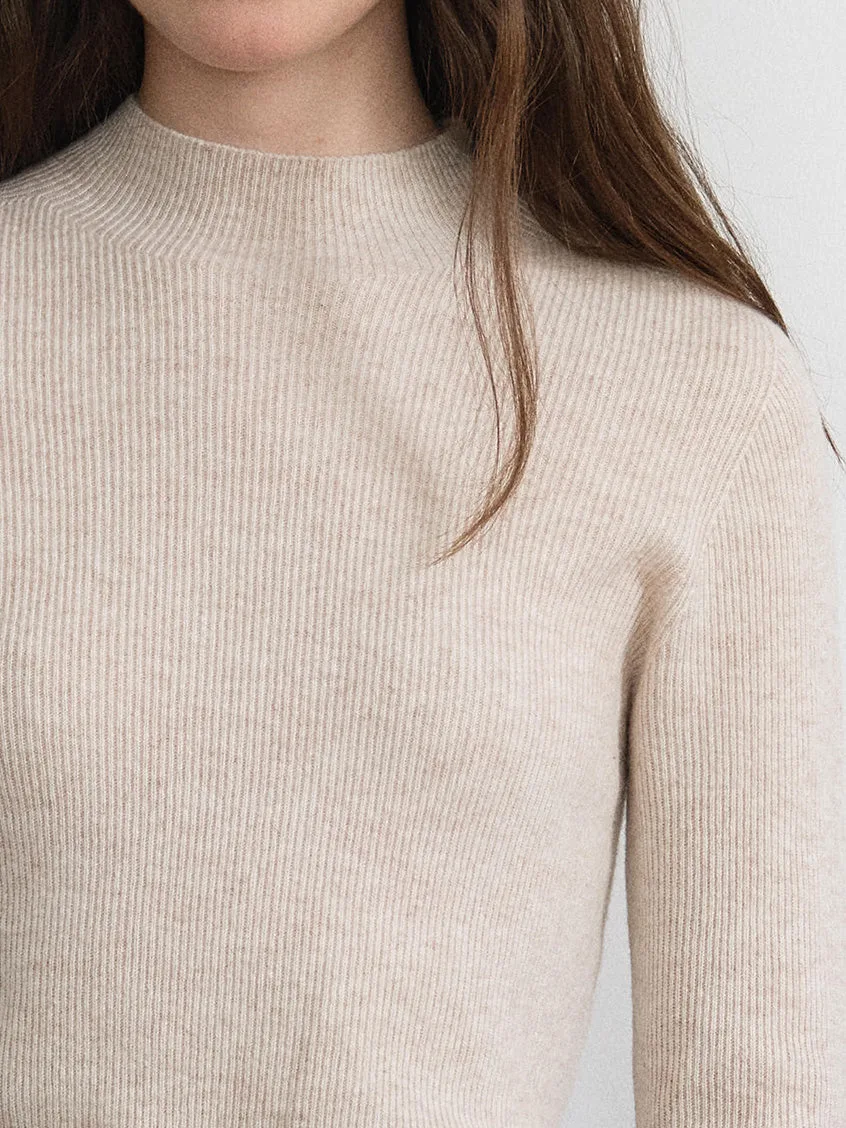
When comparing sweater colors for everyday combinations, you can browse the knitwear collection and consider how a shade might work with the jeans and shoes you already wear. For example, the Sabra Ribbed Wool-Cashmere Sweater in beige is one option to consider alongside your existing basics. Use the product photographs and listed information to assess the actual item rather than assuming a particular fit or finish.
Make the final choice around the day
Picture two different casual situations. For errands on foot, you might choose an untucked sweater, sleeves that stay out of your hands, and sneakers that feel steady for walking. The outfit can look finished through a clean neckline and one repeated color, without a tuck or visible shirt layer. For a relaxed meal with friends, you might try a small front tuck, a glimpse of shirt cuff, and a simple flat or boot. That version has a little more definition, but it should still feel comfortable when you sit.
Before leaving, check three places: the neckline, the sweater hem, and the point where the jeans meet the shoes. Then move once—sit, reach, or walk—and see whether your choices hold up. If one area feels fussy, simplify it instead of adding another accessory. For help checking available fit information before ordering, see the size guide; questions about a specific item can go to the Rustic Cottage team. A sweater and jeans outfit does not need many finishing touches. It needs a hem that behaves, shoes that meet the jeans cleanly, and one detail that makes the pairing feel like yours.
Explore the pieces behind the ideas
Browse our knitwear for full product photographs and listed specifications. Ask our team for fit and availability, or visit wholesale partnerships if you’re buying for a boutique.