Imagine getting dressed for a casual lunch in a blouse with a broad, distinctive collar. You like the collar, but your hair is falling forward and the outfit feels unfinished. A small clip, narrow ribbon, or neatly tied scarf could help—but a second dramatic detail might make the whole neckline feel crowded. The useful question is not simply which accessory matches. It is where it sits, how much texture it adds, and whether it lets the collar remain the outfit’s focal point.
Let the collar set the visual volume
Start by noticing what makes the collar bold. It might be wide, sharply pointed, edged with trim, or visually prominent because of its color against the blouse. That quality is already doing the work of a statement detail, so the hair accessory can be quieter in scale or finish. A small barrette near the back of the head, for example, keeps hair in place without adding another shape beside the collar points.
This is a useful approach when you want the blouse to lead the outfit, especially with simple trousers or a plain skirt. It may not be the right choice if the collar is actually subtle and the outfit needs a stronger accent. In that case, a more noticeable hair detail can be intentional. Think of the collar as the reference point: choose the accessory in response to its visual weight, not just its color.
Choose smooth against detailed—or repeat texture lightly
A smooth hair accessory can create a clean pause beside a collar with lace, gathers, embroidery, or a pronounced edge. A plain clip or narrow ribbon has little surface activity, so it is less likely to compete with the collar’s detail. This contrast can be especially helpful when the blouse and accessory are close together in the frame of your face.
Texture can work too, but it asks for more restraint. If the collar is relatively simple, a textured bow or fabric-covered clip may add a pleasing echo. If both elements are highly detailed, their surfaces can blur into one busy area. Try repeating just one quality—such as softness or a shared color—rather than matching every detail. When in doubt, compare the pieces from a few feet away: if the collar and accessory read as one crowded patch, simplify one of them.
Use placement to make room around the neckline
Placement changes the relationship between hair and collar. A small clip set behind the ear, or toward the back of a half-up style, leaves more visual space around the collar points. That often works well with a wide collar or one that spreads across the shoulders. A barrette placed high near the crown draws attention upward, which can be a useful counterpoint if the collar is broad but not especially ornate.
Close placement is not automatically wrong. A tiny pin near the temple can feel connected to the blouse without physically sitting on top of the collar. But an accessory that hangs beside a collar point may make the two outlines compete, particularly when both have similar shapes. Before settling on a position, turn your head and check the side view as well as the front. Hair can shift, and a placement that looks balanced straight on may land directly against the collar when you move.
Consider a small scarf when you want softness
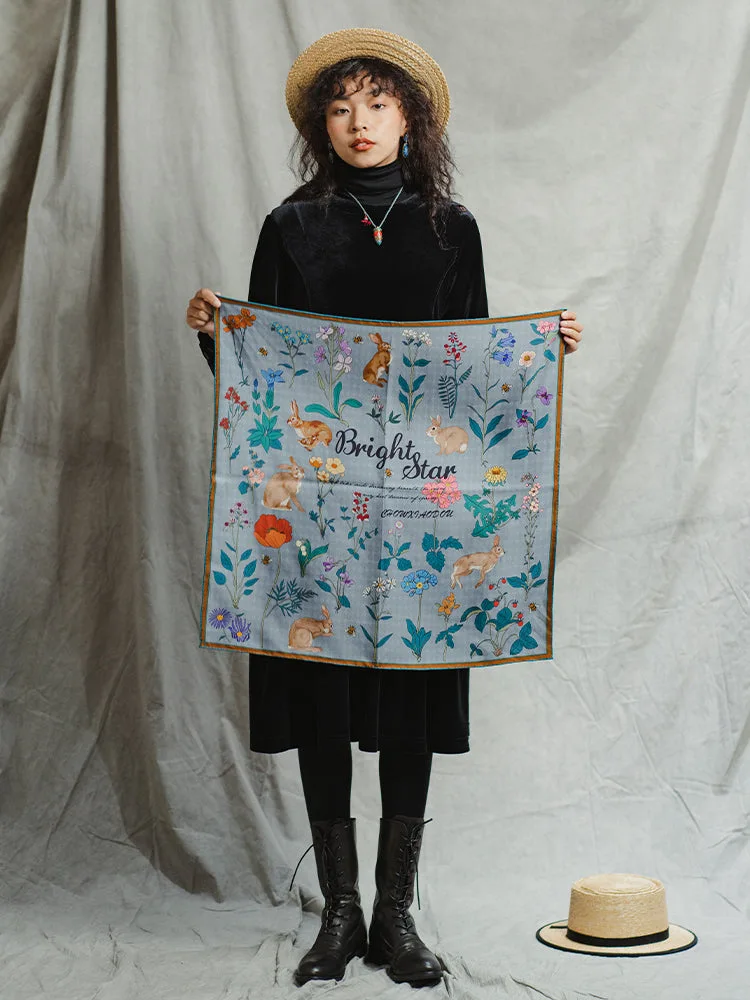
A square scarf offers a different kind of hair accent from a clip: it can add color and a little visual movement while still being tied compactly. For one example, the Chowxiaodou gray-blue silk twill scarf is listed as 25 by 25 inches and made of 100% silk. Its product description notes a slightly firm feel and a hand-drawn pattern. Those details make it worth considering if you want a patterned accent, though the pattern may be too active beside a collar that already has substantial decoration.
Try folding a scarf into a narrow band and tying it around a ponytail or near the base of a low braid. A compact tie keeps the pattern away from the collar itself. A full bow, by contrast, adds more volume and may compete with a large collar. The listing also states that accessories, including scarves, are not returnable or exchangeable, so check the product details and consider whether its color and pattern suit clothes you already wear.
Coordinate by one detail, not by perfect matching
Exact color matching can make a hair accessory feel like an extension of the blouse, but it can also create a coordinated set effect that feels more formal than you intended. A softer connection is often easier to wear: repeat one color from a print, choose a neutral that relates to the blouse, or echo a finish without copying the collar’s shape. A blue-gray scarf, for instance, could sit with a blouse that has a small cool-toned detail, while the rest of the outfit stays uncomplicated.
When the collar is already patterned or brightly colored, try a hair accessory in a quieter shade rather than adding another print. When the blouse is plain, a small patterned accessory may bring interest without overwhelming it. Browse the accessories collection for options, but judge any piece against the actual collar you plan to wear. A color that looks calm on its own can become prominent when placed beside a strong neckline.
Do a three-view mirror check before you leave
Use a quick fitting exercise to compare options instead of relying on a close-up mirror view. Put on the blouse and stand several feet from a full-length mirror, or use a phone photo taken from a natural standing distance. First, wear your hair without an accessory and notice how clearly the collar reads. Then try one smooth option and one textured option, keeping the placement similar. Compare the front, side, and a slight turn of your head.
Ask three practical questions: Can you still see the collar’s outline? Does the accessory look deliberate rather than accidentally tangled with your hair or collar? Does it stay in place when you move? If one option crowds the neckline, move it farther back or reduce its size. If the collar disappears altogether, choose a quieter accessory. This is a styling check, not a rule about what anyone should wear; the better choice is the one that feels comfortable and looks intentional to you.
Make the final choice around the day’s outfit
For errands or a relaxed lunch, a small smooth clip can keep the focus on a detailed collar without requiring the rest of the outfit to coordinate. For a plain blouse with a simpler collar, a narrow scarf tie can add a gentle point of color. If you are wearing earrings, glasses, or another noticeable detail near your face, take those into account too: the hair accessory may be best kept especially small so the collar still has room to register.
Before ordering an accessory, review its listing for color, dimensions, and any purchase terms, then compare it with the clothes you expect to wear. You can browse Rustic Cottage collections for outfit possibilities and use the contact page if you need to ask a question about a listing. The guiding choice is simple: let the collar speak first, then add just enough hair detail to make the outfit feel finished.
Explore the pieces behind the ideas
Browse our accessories for full product photographs and listed specifications. Ask our team for fit and availability, or visit wholesale partnerships if you’re buying for a boutique.