Ordering clothing without trying it on can feel like guesswork, especially when you prefer vintage-inspired silhouettes with specific proportions. Learning to read clothing measurements before ordering online reduces surprises, keeps returns low, and helps you pick pieces that flatter your shape and wardrobe needs. This guide walks through the measurements listings you’ll encounter on product pages and wholesale sheets, explains what they mean for fit, and gives concrete outfit and business examples you can use right away.
Start with the garment’s listed measurements, not your dress size
Sizes like S, M, L or 6, 8, 10 are inconsistent across brands. The single most useful rule is to compare garment measurements with a well-fitting item you already own. Lay that item flat, smooth it, and measure with a soft tape. Typical online listings will include chest/bust, waist, hip, sleeve length, shoulder, and garment length. If a product page doesn’t include those numbers, request them via email before placing an order—website orders are confirmed in writing with availability, shipping, and payment terms.
Example: a retro-inspired blouse with a “M” tag may have a 38" bust measurement on the listing. If a blouse you own that fits is 36" across the bust when measured flat, you’ll know the new item offers roughly 2" extra circumference; that’s useful for layering over a camisole or a thin sweater.
Understand how each measurement is taken
- Bust/Chest: Measured across the garment from seam to seam just under the armholes, then doubled for full circumference.
- Waist: Measured at the narrowest part of the garment; for empire or drop-waist styles, this changes—check the product notes.
- Hip: Measured across the fullest part of the garment; for skirts and dresses this is critical to know whether the garment will pass your hips.
- Shoulder: Measured from one shoulder seam to the other. A wider shoulder measurement yields a broader, structured look; a narrower one creates a sloped fit.
- Sleeve length: Usually measured from shoulder seam to sleeve hem. For puff sleeves or blouson sleeves, the listed sleeve may refer to the cuff-to-shoulder seam rather than total circumference.
- Garment length: Measured from the highest shoulder point down the front. For dresses with a drop waist or flared hem, also check where the hem sits relative to the waist.
Trade-off: Some sellers list body measurements (the wearer’s body size) rather than the garment’s flat measurements. If you’re provided both, prioritize the garment’s flat measurements for the most accurate fit prediction.
Recognize the role of ease and intended silhouette
Every garment is cut with a certain amount of ease—the extra room beyond body measurements to allow movement and achieve a silhouette. Understanding intended ease helps you predict whether the garment will skim, drape, or billow.
- Negative or zero ease (close fit): expect a snug fit that follows the body; choose carefully if you’re between measurements or plan to layer.
- Moderate ease (1–3 inches): typical for blouses and dresses that are comfortable without appearing oversized.
- Generous ease (4+ inches): seen in relaxed tunics, smocks, and oversized coats; ideal when you want layering room or a looser aesthetic.
Outfit example: A relaxed prairie dress listed with a 4" ease at the bust pairs well with a structured belt and ankle boots for contrast. A fitted faux-layered top with minimal ease, such as the Madeleine V-Neck Faux Layered Wool Top, is better under a cardigan or blazer than over chunky knits.
Check fabric behavior and finish before assuming stretch
Fabric content and construction determine whether a garment stretches, drapes, or resists movement. Listings often name the fiber content; if they don’t, ask. But always confirm care and composition on the sewn care label when the item arrives.
- Woven cotton, linen, velveteen: minimal stretch — rely on the garment measurement and choose a size with some ease or order a size up if you prefer room.
- Knit, jersey, or items labeled as containing elastane/spandex: have stretch — you can size closer to your measurements and consider the relaxed recovery of the fabric after wear.
- Lined garments: the lining can limit stretch and change drape; check both outer and lining measurements if provided.
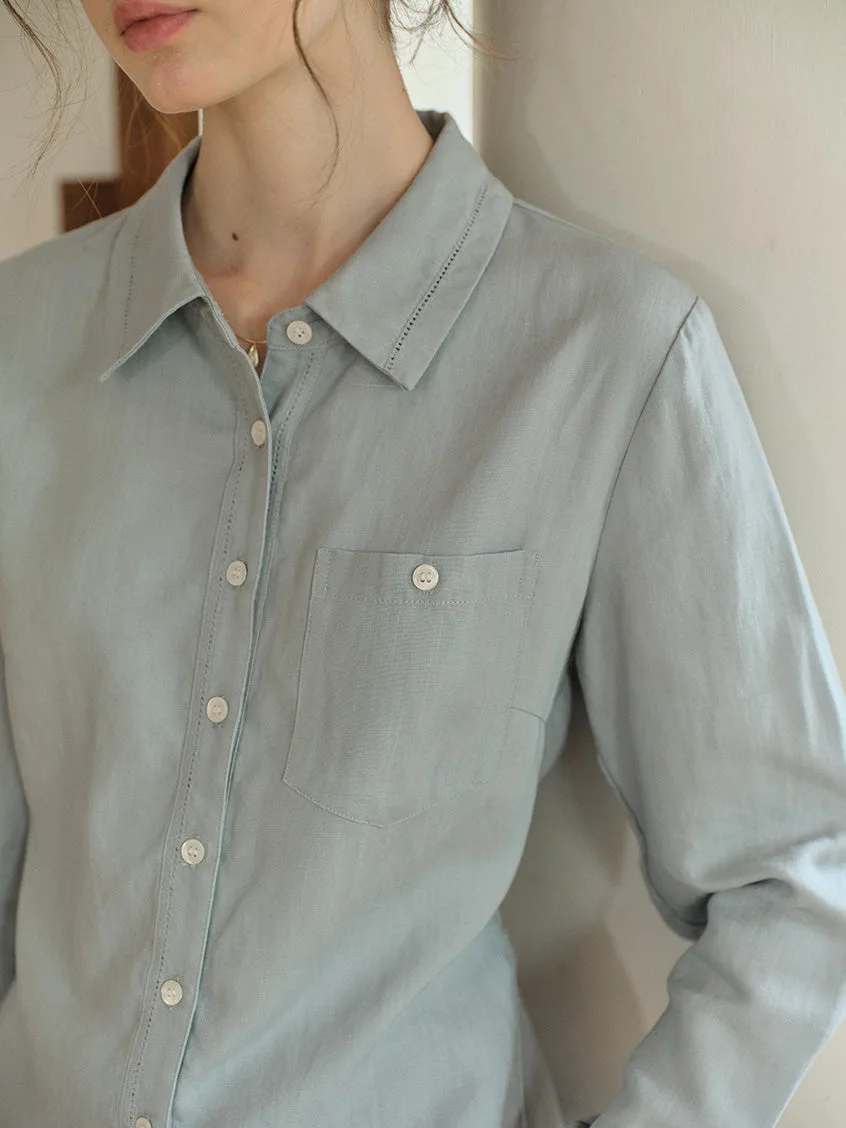
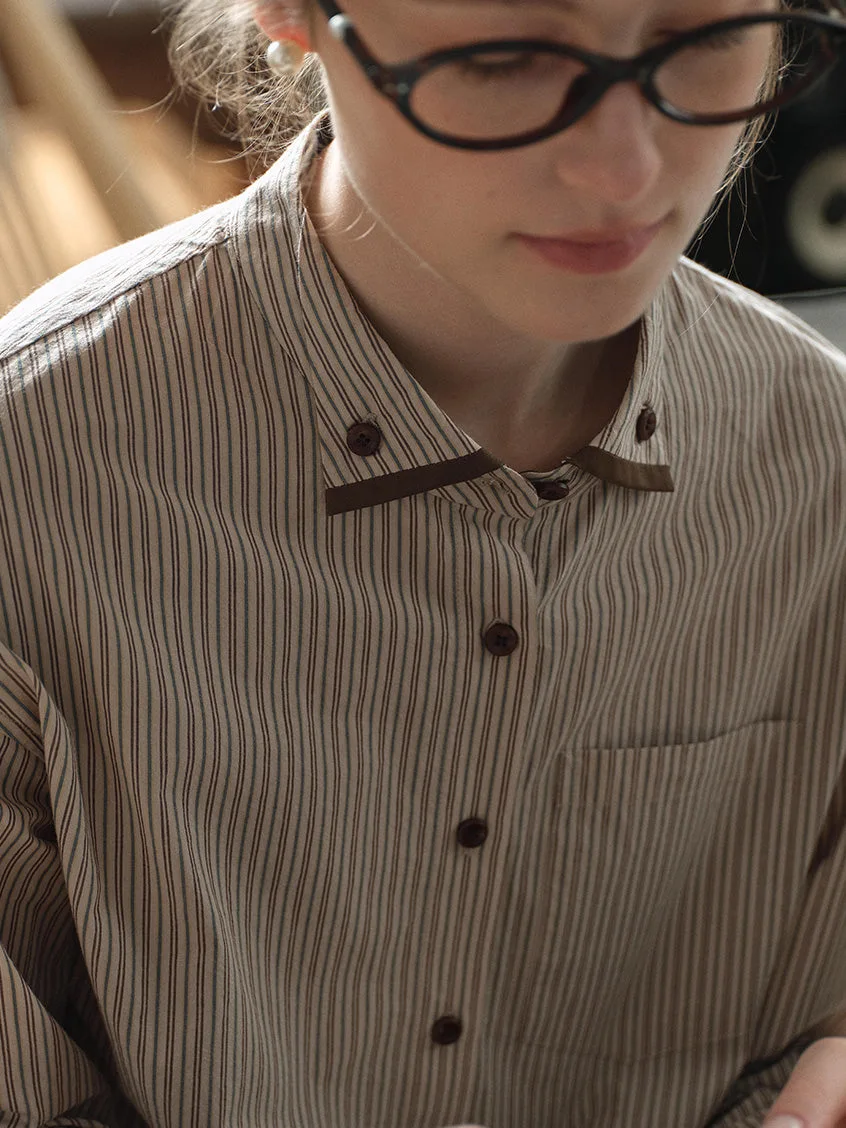
Product example: Two colorways of the same shirting silhouette—Hesper 100% Cotton Contrast-Cuff Velveteen Shirt and Hesper 100% Cotton Contrast-Cuff Velveteen Shirt—are labeled 100% cotton. Expect minimal stretch; if you want to layer a turtleneck underneath, size up or choose the silhouette with more ease.
Translate measurements into real fit decisions
Once you’ve measured your reliable garment and compared it to the listing, convert that into concrete fit choices.
- If the bust measurement is smaller than your best-fitting top: don’t order unless you want a fitted look or the garment has high stretch; otherwise, size up.
- If the waist is larger than your measurement by 2+ inches: expect a looser waistline; plan for belts or alterations if you prefer shape.
- If the shoulder measurement is broader: the top will sit square and may feel stiff under jacket sleeves; choose based on whether you prefer structure or a sloped shoulder line.
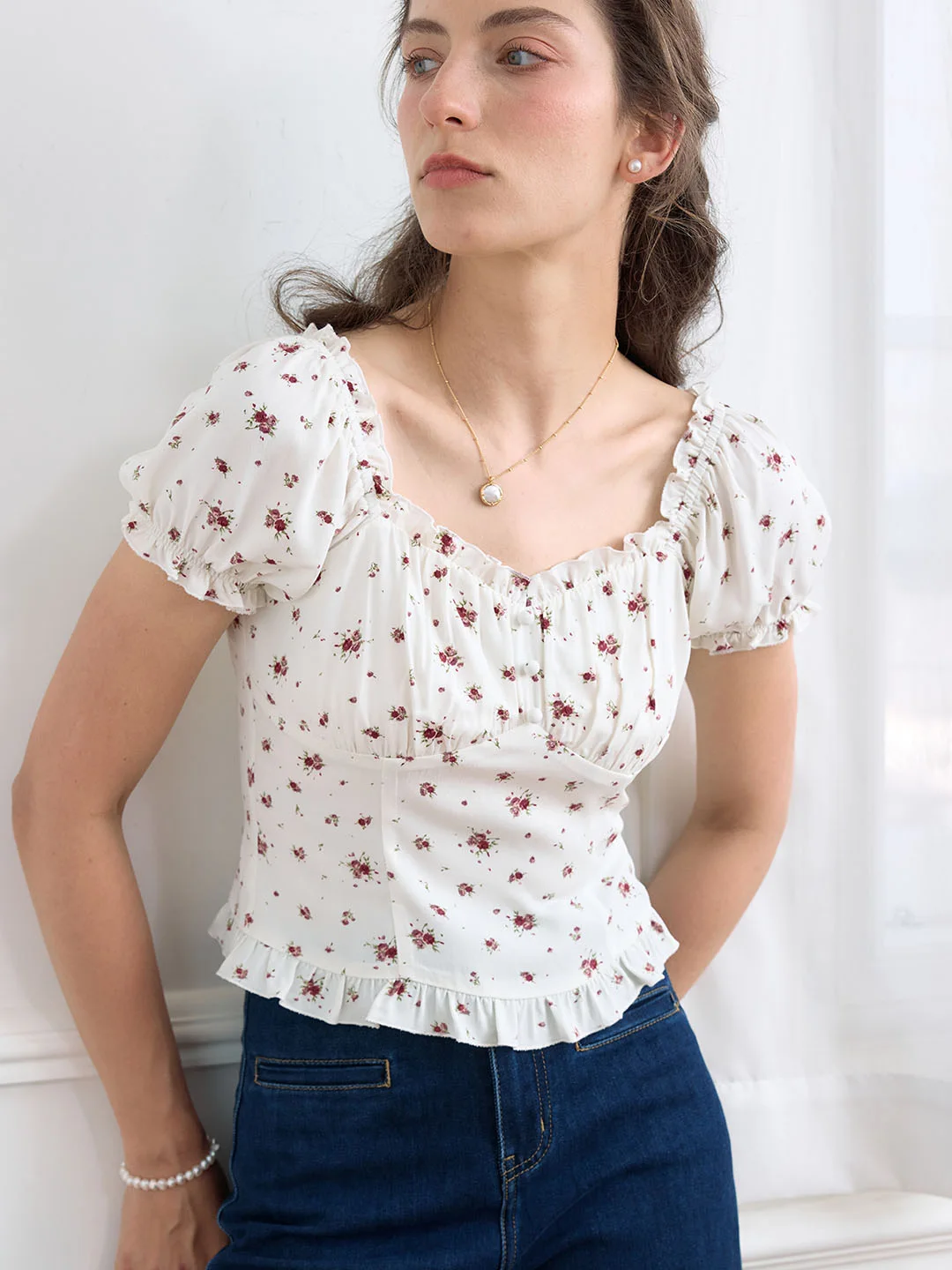
Outfit example: The Octavia Mock Neck Hollow Lace Patchwork Puff Sleeve Blouse with pronounced puff sleeves will have extra sleeve circumference measurement. If the listing shows a small shoulder measurement and you want the sleeve to puff as pictured, trust the listed sleeve circumference rather than your arm measurement alone.
Account for length: how hem location changes outfits
Length measurements change how you style a piece. A dress hitting mid-calf has a completely different feel and layering options than the same dress shortened to above the knee.
- Top length: Cropped tops work with high-waisted skirts or trousers; a tunic-length blouse pairs with leggings or slim jeans.
- Skirt/dress length: Compare the listed garment length to a skirt or dress you own to estimate where the hem will fall on your height. Consider heel height: a midi on flats might hit mid-calf, but with heels it moves lower.
- Trade-off: Longer hems offer more coverage but may overwhelm petite frames; shorter hems may require tights in cooler months to remain wearable.
Business example: For boutique buyers choosing stock, note which lengths are most popular with your clientele. If your customers favor knee-length for everyday wear, prioritize items whose listing length matches that look on an average-height model and order sample sizes to confirm before larger wholesale orders.
Alterations, returns, and wholesale ordering practices
Even with careful measurement, minor alterations may be the most cost-effective way to get a perfect fit. For small adjustments—shortening a hem, taking in a side seam—factor alteration time and cost into your decision.
For consumer shoppers: confirm the store’s return policy in writing by email before submitting a website order. Since Rustic Cottage handles website orders as email requests with availability, shipping, and payment confirmed in writing, use that exchange to request any additional measurements you need.
For wholesale buyers: ask for size guides and flat measurements for each size. Wholesale pricing, minimums, and lead times are supplied on inquiry; request these details by email and keep the written estimates. Order a small assortment of sizes first to test how your customer base responds before committing to larger quantities.
Use reference garments and photos for final judgement
If a product page includes model photos, note the model’s height and the size she’s wearing if provided. Compare how the garment looks on that body type to your own. When photos show details like darts, pleats, or gathers, they often signal where extra space is created—those features change how a flat measurement translates to a fit.
Practical tip: keep a notebook or a digital file with measurements of your best-fitting items (bust, waist, hip, shoulder, sleeve, and length). When shopping at /collections/ or browsing /collections/tops/, match product measurements to your reference list rather than relying on size labels.
Final fit checklist before you hit send
- Compare the garment flat measurements to a similarly styled, well-fitting item.
- Confirm fabric content and whether the fabric will stretch or hold its shape.
- Note ease: does the listed measurement give the silhouette you expect?
- Check where the hem and sleeves will hit on your frame, using garment length and sleeve length.
- Request any missing measurements by email and keep the written confirmation for orders; wholesale buyers should request size guides and pricing details via the /wholesale/ contact.
- Verify care by checking the sewn care label first when the item arrives; avoid assuming universal washing methods.
Reading clothing measurements before ordering online turns sizing confusion into a predictable process. Whether you’re buying a single romantic blouse for everyday wear or placing a small wholesale order for your boutique, the same steps—compare flat measurements, understand fabric behavior, and verify details in writing—will save time and reduce returns. For help with specific items, reach out through our contact page or check our size guide. Explore our tops or browse full collections to compare listings and practice measuring: visit blouses and tops or clothing collection.
Specific product notes: the velveteen Hesper shirts above are 100% cotton and should be measured against a structured shirt in your closet for best layering decisions. When considering a layered wool top like the Madeleine, account for minimal ease and potential lining restrictions. For any lace or puff-sleeve blouses, trust sleeve circumference and shoulder measurements to preserve the intended silhouette.
When in doubt, ask—email inquiries receive written confirmations of availability, shipping, and payment. For wholesale buyers, request flat measurements and pricing on inquiry to ensure the pieces you select will perform for your customers. Thoughtful measurement checks mean fewer surprises and more garments you’ll reach for every week.
Explore the pieces behind the ideas
Browse our blouses & tops for full product photographs and listed specifications. Ask our team for fit and availability, or visit wholesale partnerships if you’re buying for a boutique.