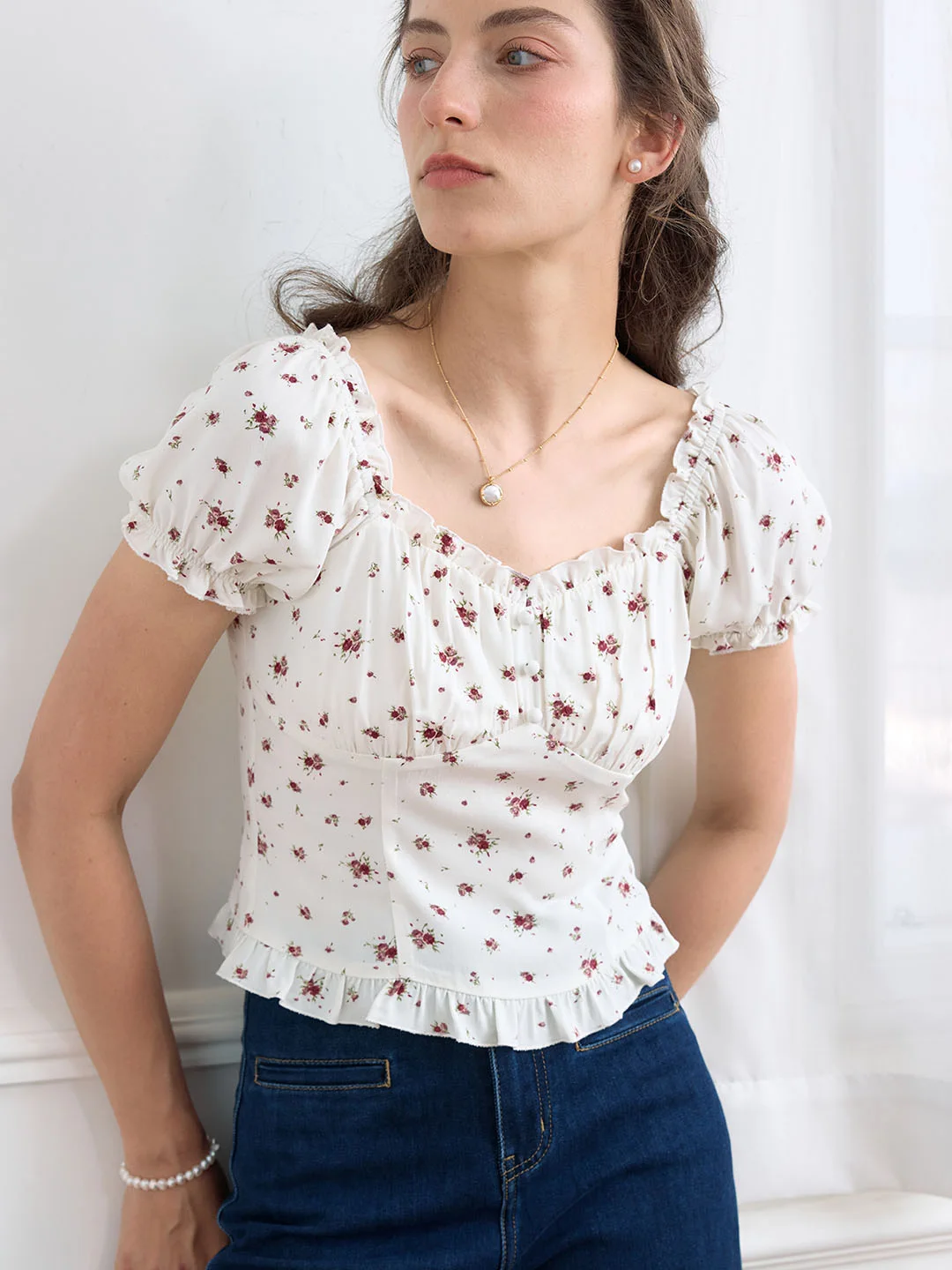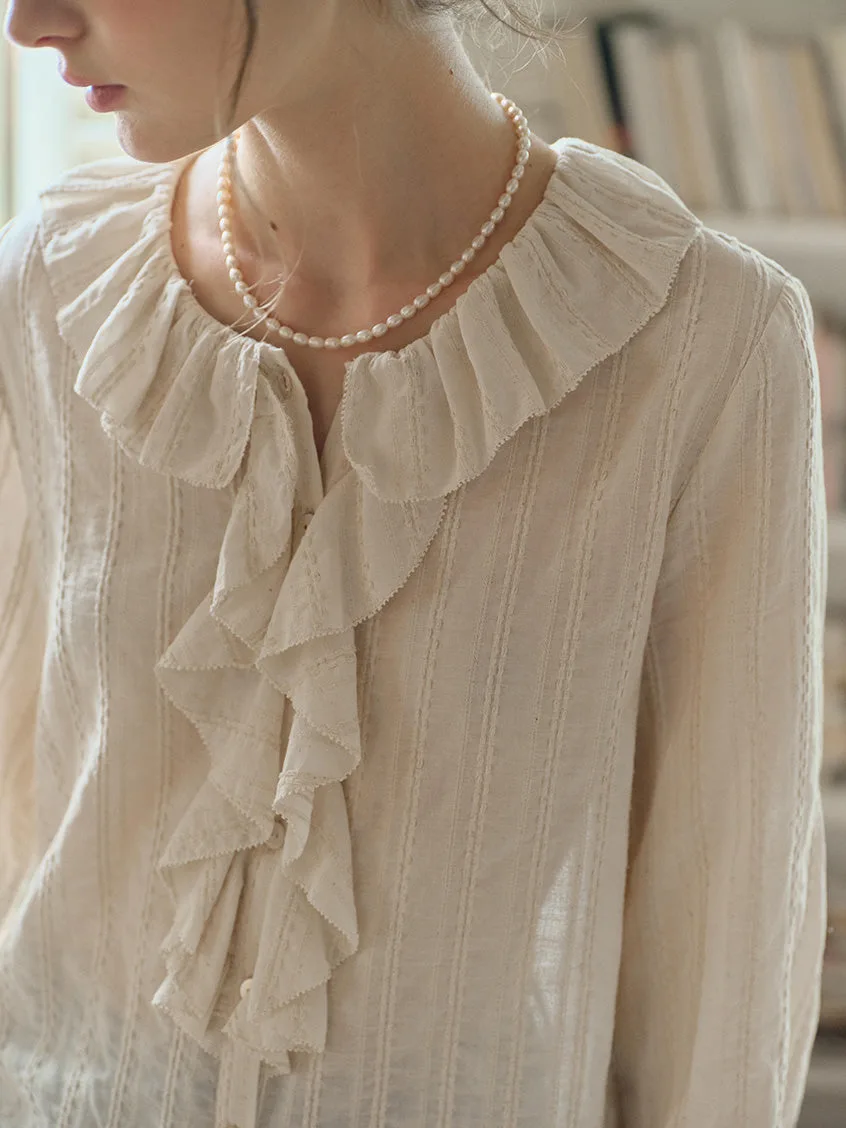
Imagine getting dressed for an ordinary weekday and reaching for a blouse with a ruffled collar. You like its vintage mood, but you do not want the outfit to feel like a costume or require a special occasion. The simplest answer is to let that single detail lead. Keep the rest of the outfit plain, choose colors that sit comfortably together, and check how the ruffle behaves under a layer before deciding the blouse works for your routine.
This approach is especially useful when you enjoy romantic details but usually wear uncomplicated clothes. It does not mean every other item must be severe or plain forever; it gives the blouse room to be noticed without competing with more decoration.
Choose One Ruffle Placement to Lead
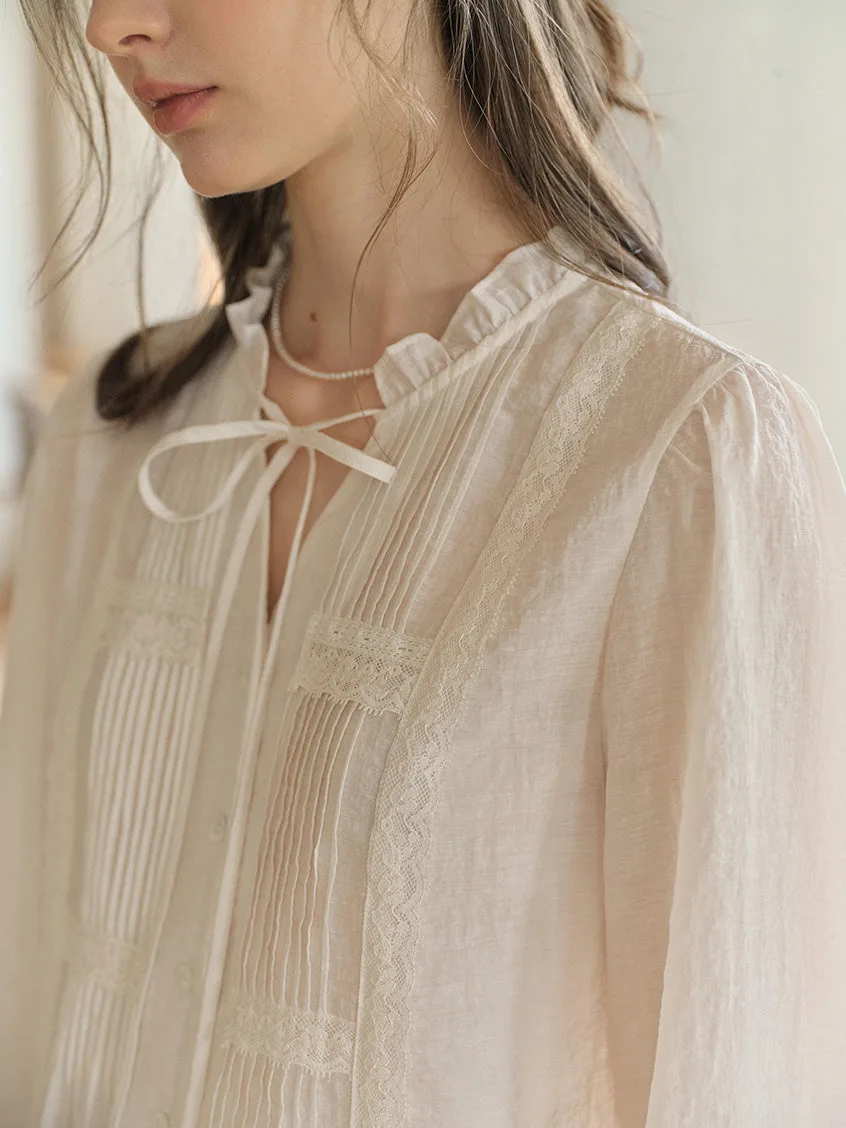
Before planning an outfit, identify exactly where the ruffle sits: at the neckline, down a front opening, or on the sleeves. Pick one placement to be the visual focus, and avoid adding another prominent ruffle elsewhere. For a ruffle collar, for example, a smooth crew-neck cardigan or an unadorned jacket keeps attention near the face. With sleeve ruffles, a simple neckline and sleeves that are not crowded by another layer can make more sense.
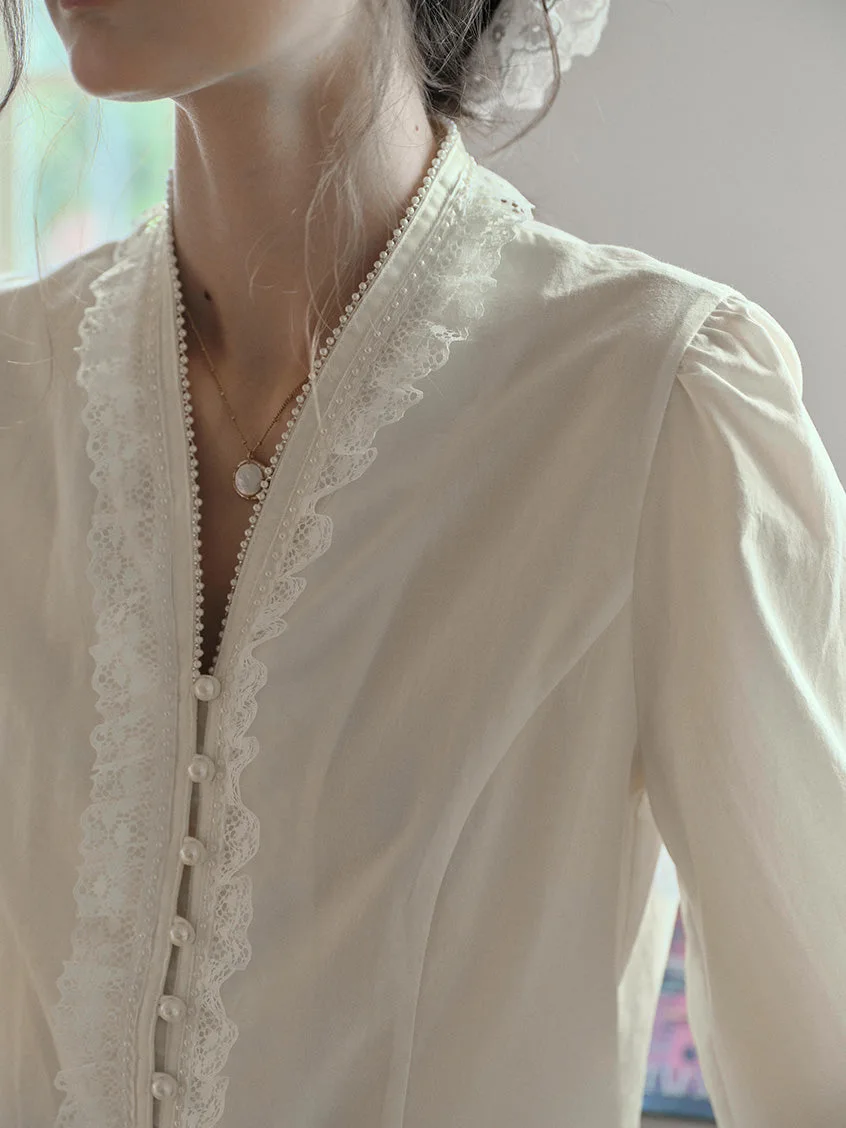
The Cassia Pleated Ruffle Collar Lyocell Lace Blouse is one example with a ruffle collar; its listed details also include pleating and lace. If you want a very minimal look, those extra details may still read as more decorative than you prefer. Treat placement as a starting point, not a promise that every blouse with a single focal point will feel understated.
Give the Blouse Plain Companions
Pair a detailed blouse with separates that do not repeat its decorative language. Straightforward trousers, a plain skirt, or jeans without conspicuous embellishment can give the outfit a calm base. The useful question is not whether every garment is completely featureless, but whether it asks for attention in the same way. A clean waistband or a simple hem tends to leave the eye with one clear destination: the ruffle.
For instance, try a ruffle-collar blouse with dark, unembellished trousers and simple flats, or with a plain denim skirt and an uncomplicated belt. If the blouse already includes lace or pleating, skip a lace-trimmed skirt and ornate necklace. Those choices can be lovely for a deliberately dressed-up look, but they work against the goal of making one vintage detail feel easy and everyday. Browse the tops collection with this one-detail question in mind.
Soften Contrast with a Same-Color Layer
A layer close in color to the blouse can make a ruffle feel less like a sharp contrast and more like part of the outfit. A cream blouse beneath a cream or soft ivory cardigan, for example, keeps the neckline visible without putting a dark border around it. The layer need not match exactly. A small difference in shade can preserve definition while keeping the overall effect quiet.
Check the result in the mirror with the cardigan open and closed. Open, it may frame the ruffle; closed, it may cover the detail or press it into an awkward shape. If the layer has a prominent collar, buttons, or other decoration, it can become a second focal point. Same-color layering is not automatically the simplest option: use it when the shapes lie comfortably together, and leave the layer off when it hides or crowds the blouse.
Keep the Color Story Narrow, Not Flat
Two or three related colors are often enough to make the outfit feel composed without adding another statement. Cream with denim blue, for example, gives a gentle contrast; cream with tan and brown stays closer in value. You can also keep the blouse and layer near one another in color, then let a darker bottom provide definition. These are suggestions rather than rules—your usual colors and the setting matter more than a fixed palette.
Notice the difference between color contrast and detail contrast. A dark skirt may give a light blouse a clear outline while remaining visually simple. A pale skirt with several trims may have less color contrast but more competing detail. If the blouse feels too prominent, try changing the color relationship before adding jewelry or another patterned item. A quieter shade nearby may solve the problem with less effort than another accessory.
Test the Fit and Layering Before You Commit
Try a short three-part check at home. First, sit and raise your arms as you might during a normal day; notice whether the ruffle shifts, pulls, or becomes bothersome. Second, put on the layer you expect to wear most often and look at the neckline and shoulders from the front and side. Third, take the layer off and see whether the blouse still feels balanced with your chosen bottoms. This checks movement and outfit combinations without assuming that a particular cut suits everyone.
For online orders, compare the available garment information with a blouse you already wear comfortably, and consult the size guide where available. Product descriptions may not answer every fit question. If a detail is unclear, ask before submitting an order request through the contact page. A ruffle that feels pleasant while standing may be less useful if it catches under your usual layer or distracts you during daily activities.
Use the Ruffle in Ordinary Outfit Formulas
To keep a vintage-inspired blouse from feeling costume-like, connect it to clothes you already wear. A ruffle collar with straight jeans and plain shoes is an approachable weekend combination. With simple trousers and a neat cardigan, it can suit a casual workday if that setting allows the blouse’s level of detail. A plain skirt can work too, especially when its shape and fabric do not add another elaborate feature.
Keep accessories restrained at first. Try no necklace with a collar ruffle, then add small earrings only if the neckline still feels unfinished. This is a practical trade-off: accessories can make a simple outfit feel personal, but a necklace competing directly with the collar may make the area look busy. If your preferred outfit still needs adjustment, change one element at a time—layer, bottom, or accessory—so you can see what actually helps.
Make a Quick Wearability Decision
Before keeping a ruffle blouse in your regular rotation, ask three questions: Is there one clear decorative focus? Can you name two plain companions already in your closet? Does the blouse work with a layer you would genuinely reach for? If you answer yes to all three, the piece has a practical path into everyday outfits. If one answer is no, consider whether a different bottom or a simpler layer would resolve it, rather than buying extra items to make the blouse work.
Care and fit details deserve the same grounded approach. Follow the sewn care label, and check the listing for the specific composition and stated details rather than assuming all ruffle blouses behave alike. The aim is not to remove the romance from the garment. It is to give that one ruffle enough space to feel like part of your own clothes, instead of a costume waiting for an occasion.
Explore the pieces behind the ideas
Browse our blouses & tops for full product photographs and listed specifications. Ask our team for fit and availability, or visit wholesale partnerships if you’re buying for a boutique.