Imagine getting dressed for a cool morning: you reach for a favorite smooth skirt and a cardigan, then pause because the outfit looks either too plain or too busy. The solution may not be another belt, necklace, or scarf. It may be a more deliberate contrast between the knit’s surface and the skirt’s finish. A little texture can give a simple skirt presence, while a smooth knit can let the skirt’s movement or sheen take the lead.
Think of this as a pairing workshop, not a set of rules. A ribbed cardigan over a fluid skirt creates a different effect from a chunky cable knit over a crisp one. Both can work; the useful questions are how much texture you want to see, where the fabric gathers, and whether the outfit has one clear focal point.
Start by reading the two surfaces
Before deciding on color or accessories, look closely at the knit and skirt together. A smooth skirt has a relatively even surface, so it gives the eye a calm place to land. A knit adds visible structure: ribs create narrow repeated lines, while cables form broader raised patterns. That difference is enough to make the pairing feel considered, even when both pieces are in quiet colors.
Try holding the cardigan next to the skirt in natural light. Notice whether the knit’s pattern is subtle from a few steps away or immediately prominent. If you can see the skirt’s own texture, print, or shine competing with the knit, simplify one side. For instance, a plain matte skirt can make a cable pattern easier to appreciate. A skirt with a noticeable finish may look more balanced with a finer rib or a mostly smooth knit.
For a simple starting point, browse Rustic Cottage knitwear and imagine each piece against a skirt you already own. The goal is not to find identical fabric weights or matching textures; it is to decide which surface should be noticed first.
Choose ribbing for a quieter contrast
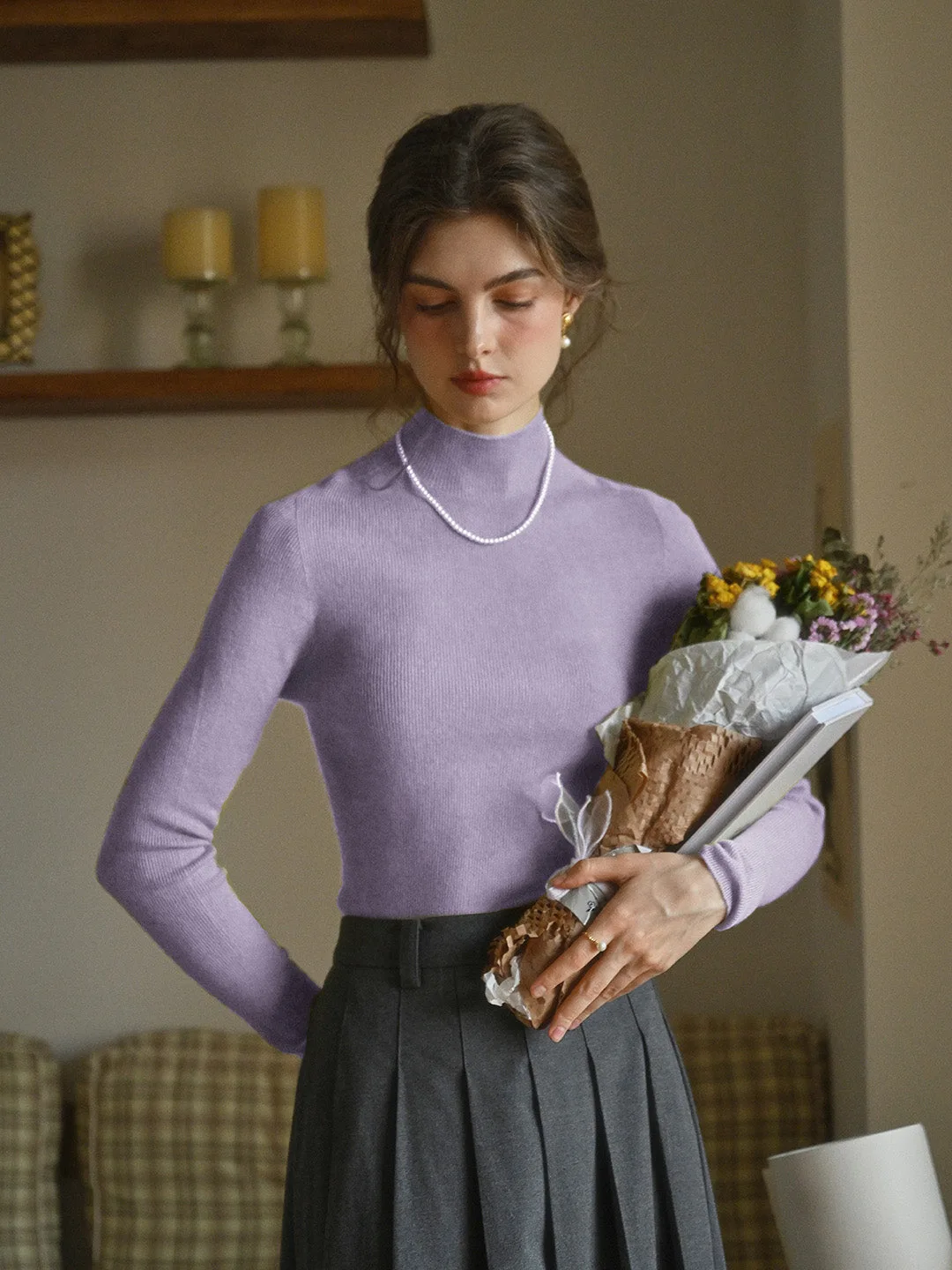
Ribbing usually reads as a repeated, fine line rather than a large motif. That makes a subtly ribbed knit a useful companion for a smooth skirt when you want texture without making the cardigan the whole story. The narrow ridges can add definition near the neckline or sleeves while leaving the overall outfit visually calm.
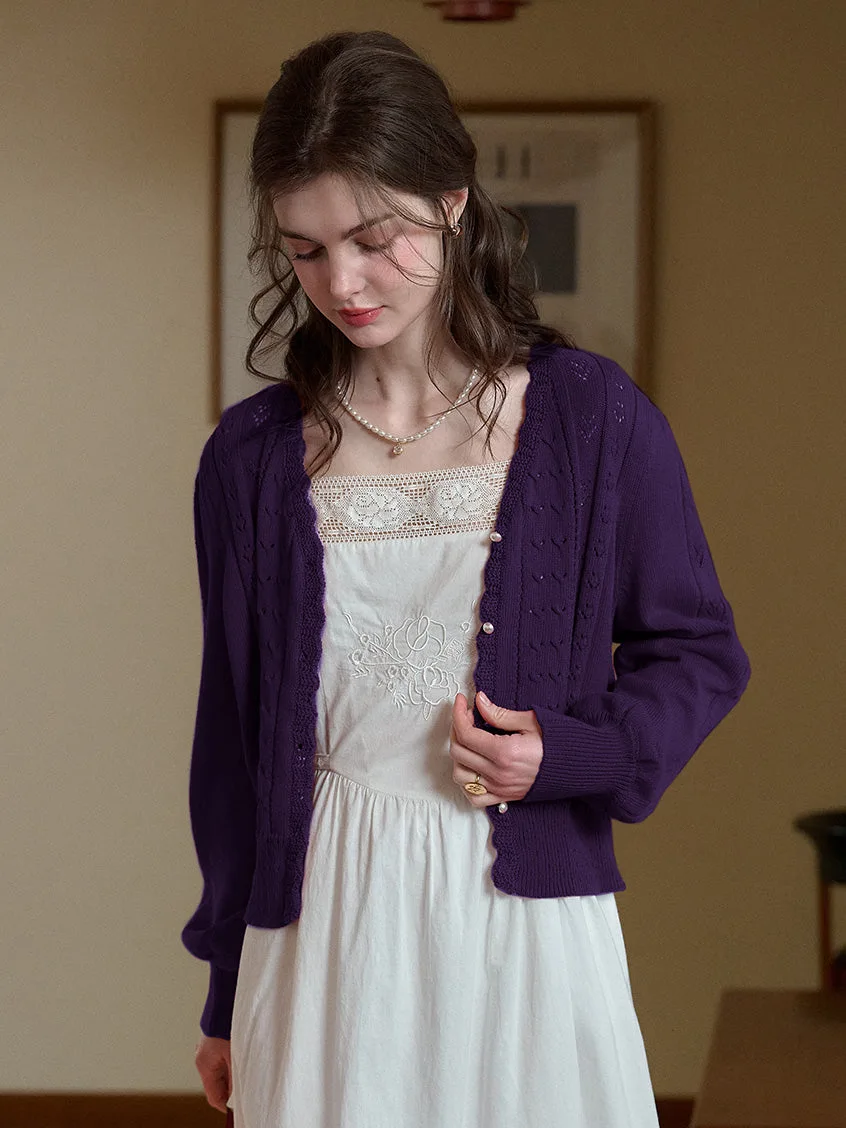
This pairing is especially easy to picture with a matte skirt and a fine-gauge-looking ribbed layer, if the garment’s actual appearance supports that description. Keep the cardigan open or wear it simply fastened, then check whether the skirt still reads clearly as a separate piece. A dark-purple V-neck option such as the Amira Wave V-neck Cotton Knitted Cardigan can be considered as a color-and-neckline example; its supplied description lists cotton and hollow details, but does not specify a ribbed surface, so inspect its photographs rather than assuming that texture.
Ribbing does not always mean understated. A strong color, pronounced ribs, or several visible details can still draw attention. If the knit looks prominent on its own, let the skirt stay plain and avoid adding another high-contrast feature near the face.
Use cable texture when you want the knit to lead
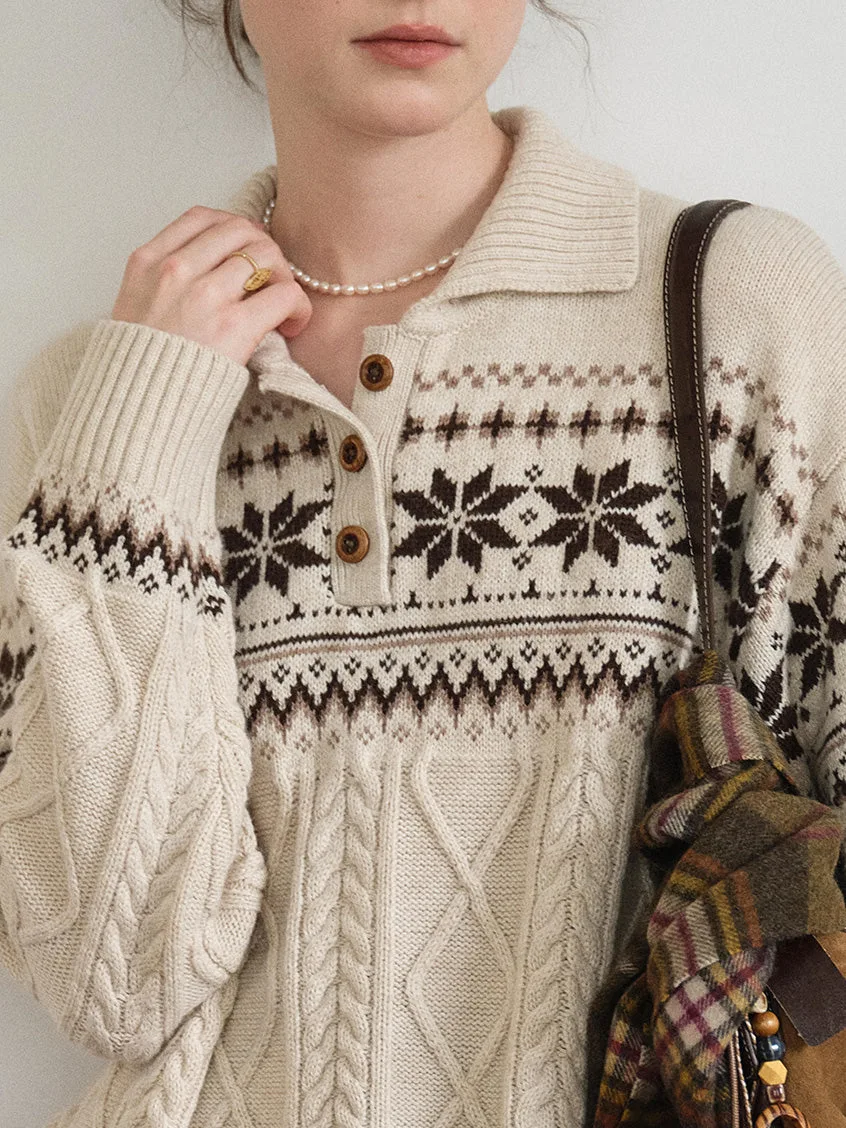
Cable patterns have more visual depth than fine ribs, so they can make a smooth skirt feel less formal or less stark. The trade-off is that a pronounced cable knit already brings a focal point. Keep the skirt’s surface relatively quiet, and consider a restrained color combination so the pattern has room to show without competing with a print or strong shine.
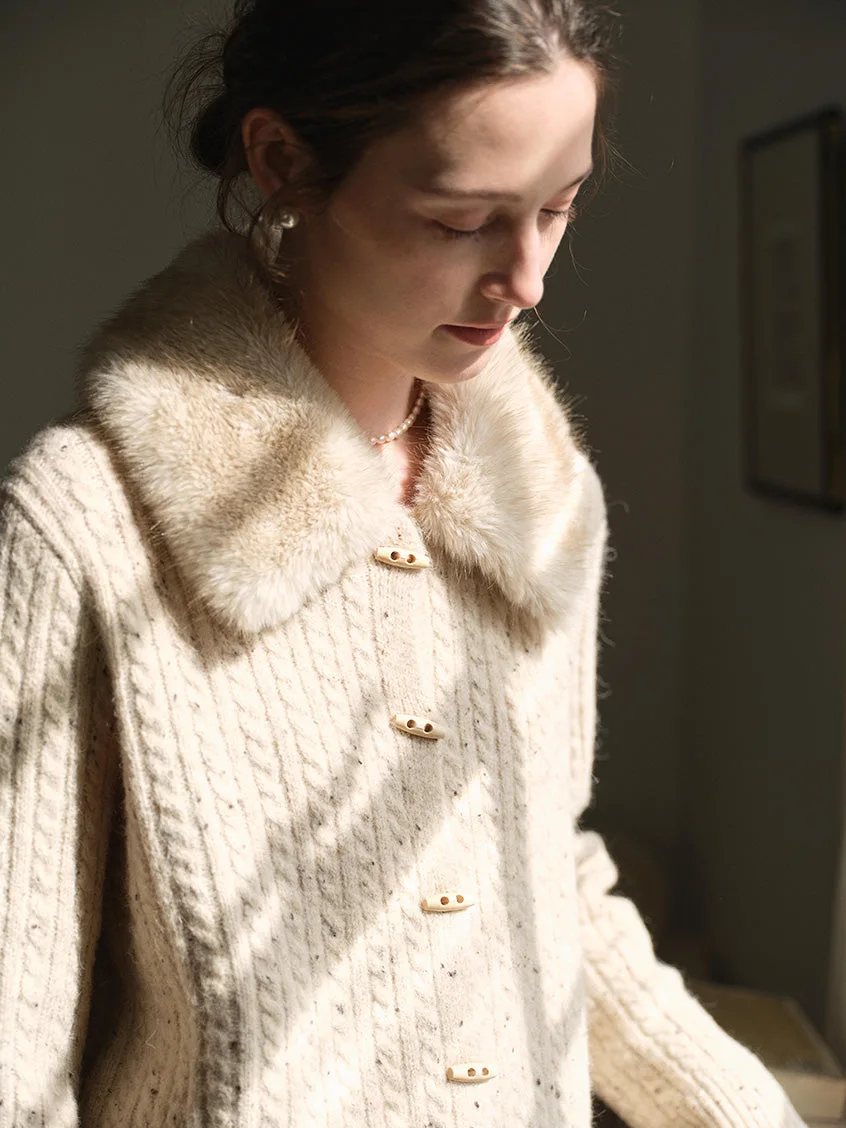
Take a look at the Neve Toggle-Front Cable Knit Cardigan as a named cable-knit example. The product title identifies its cable-knit construction and toggle front; details such as fabric composition and fit are not supplied, so check the product photographs and listed information before choosing it for a particular skirt. A cable pattern paired with a smooth, simple skirt can make the contrast itself feel intentional.
When the skirt also has a striking surface, such as a glossy finish, a prominent pattern, or visible decorative details, a cable knit may be too much at once. It can still work if you want both pieces noticed, but then keep other outfit elements quiet. If the result feels crowded, change the knit before adding or removing accessories.
Balance matte fabric and sheen
Matte and slightly lustrous surfaces create contrast even when their colors are close. A matte knit beside a skirt with some sheen can give the skirt a clear role without relying on a bold print. Conversely, a lustrous-looking knit over a matte skirt could make the upper half more noticeable. Because product descriptions do not always name a finish, judge sheen from the garment photographs and, if available, the fabric details.
Check the pairing in more than one kind of light. A skirt that looks softly reflective indoors may appear much shinier near a window, and a dark knit can absorb more visual attention than you expect. This is not a flaw; it simply changes which piece leads. If both surfaces catch the eye, consider a quieter color, a finer knit texture, or a skirt with less visible sheen.
Keep the distinction comfortable for the setting. A subtle difference in finish can make a daytime outfit feel thoughtful, while a more noticeable sheen may feel dressier. There is no need to disguise either fabric—just decide whether you want the contrast to whisper or announce itself.
Check movement, not just the mirror pose
A smooth skirt may swing, skim, or hold a cleaner line, depending on its cut and fabric. The knit has its own movement: it may fall close to the body, hang open, or create a more substantial outline. Since those details vary by garment, use the actual pieces rather than assuming a category will behave one way.
Try a three-part movement check. First, stand naturally and notice where the cardigan hem lands relative to the skirt’s waistband. Next, sit down and stand again, checking whether the knit rides up or bunches. Finally, take a few ordinary steps and turn once. Watch whether the skirt moves freely and whether the cardigan’s hem or front edges interrupt that movement. This is a practical way to spot a pairing that looks good only when standing still.
If a longer cardigan and a fluid skirt seem to blend into one column, try wearing the cardigan open or adjusting its position so the waistband remains visible. If the layers swing in competing directions, a shorter-looking visual break—such as an open front that reveals the skirt’s waist—may make the outfit easier to read. These are styling options, not promises about how a particular garment will fit.
Watch the waistband for hidden bulk
The waistband is where a good surface contrast can turn uncomfortable or look lumpy. A cardigan tucked into a skirt, a tie sitting beneath a knit, or several layers gathered at the waist can create extra thickness. That may be fine if you like the shape, but it can interrupt the smooth line you wanted from the skirt.
Try the cardigan untucked first. If you want a defined waist, test a partial tuck only if the knit and skirt settle comfortably together; a thick cable layer may bunch more than a fine knit. You can also fasten the cardigan above the waistband or leave it open over a simple top, allowing the skirt to remain smooth at the waist. Notice how the outfit feels when you sit, not only how the front looks while standing.
For a cardigan with a tie waist, consider where the tie rests in relation to the skirt’s waistband. The Lusa V-Neck Tie Waist Floral Embroidery Knit Cardigan is a product example whose title specifies a tie waist and floral embroidery. Those details may already draw attention, so pair it with a quieter skirt surface if the aim is to keep texture—not a stack of details—in focus.
Keep one focal point, then edit
Choose what you want someone to notice first: the knit’s cable pattern, the skirt’s sheen, or the contrast between the two. Let the other piece support that choice. If the cable is the focal point, a matte, unadorned skirt keeps the pattern legible. If the skirt has a soft shine, a simpler knit can frame it without adding another strong surface.
This does not require an accessory ban. It means checking whether an accessory adds something useful or simply introduces a third point of emphasis. If the outfit already has a textured cardigan, a smooth skirt, and a noticeable sheen, try it without a statement necklace first. You may find that the fabric contrast supplies enough interest on its own.
When choosing a garment online, use the available product photographs and details to assess its visible texture, finish, and shape. Rustic Cottage orders are email requests rather than instant paid checkout; for a question about a specific item, use the contact page to ask before placing a request.
A quick fitting-room pairing exercise
Bring one smooth skirt and two knit options to a full-length mirror: ideally, one with quieter texture and one with more visible pattern. Photograph each pairing from the front and side in the same light. For each, check three things: can you still see the skirt’s line; does the waistband lie comfortably when you sit; and is it immediately clear which surface is the focal point?
Then change just one variable. Wear the cardigan open instead of fastened, or swap the cable knit for the subtler option. Avoid changing the shoes, jewelry, and bag at the same time; that makes it harder to learn what the surface contrast is doing. Pick the combination that moves comfortably and feels balanced to you, even if it is not the most dramatic one in a still photograph. If neither works, the useful answer may simply be that those two pieces need a different knit or skirt—not more styling details.
Explore the pieces behind the ideas
Browse our knitwear for full product photographs and listed specifications. Ask our team for fit and availability, or visit wholesale partnerships if you’re buying for a boutique.