You put on a cotton shirt, pull a sweater over it, and the outfit looks just right—until you reach for your bag and feel the sleeve tug at your wrist. The cuff may be catching inside the knit, the sweater sleeve may be too narrow, or the shirt may simply have more fabric at the wrist than the layers can accommodate. A few focused checks can help you find the cause without giving up the combination.
The goal is not to hide every bit of shirt cuff. It is to let the shirt and knit move together without pinching, bunching, or requiring constant adjustment. Work from the upper sleeve down to the wrist: a restriction higher up can push fabric toward the cuff and make the wrist feel tighter than it is.
Start with sleeve circumference, not just sleeve length
A sweater sleeve can be long enough and still be uncomfortable over a shirt. The useful question is whether there is room around the fullest part of your forearm and near the elbow when both layers are on. A close-fitting knit may lie smoothly over a thin shirt but feel restrictive over a blouse with gathers, a full sleeve, or a heavier cuff.
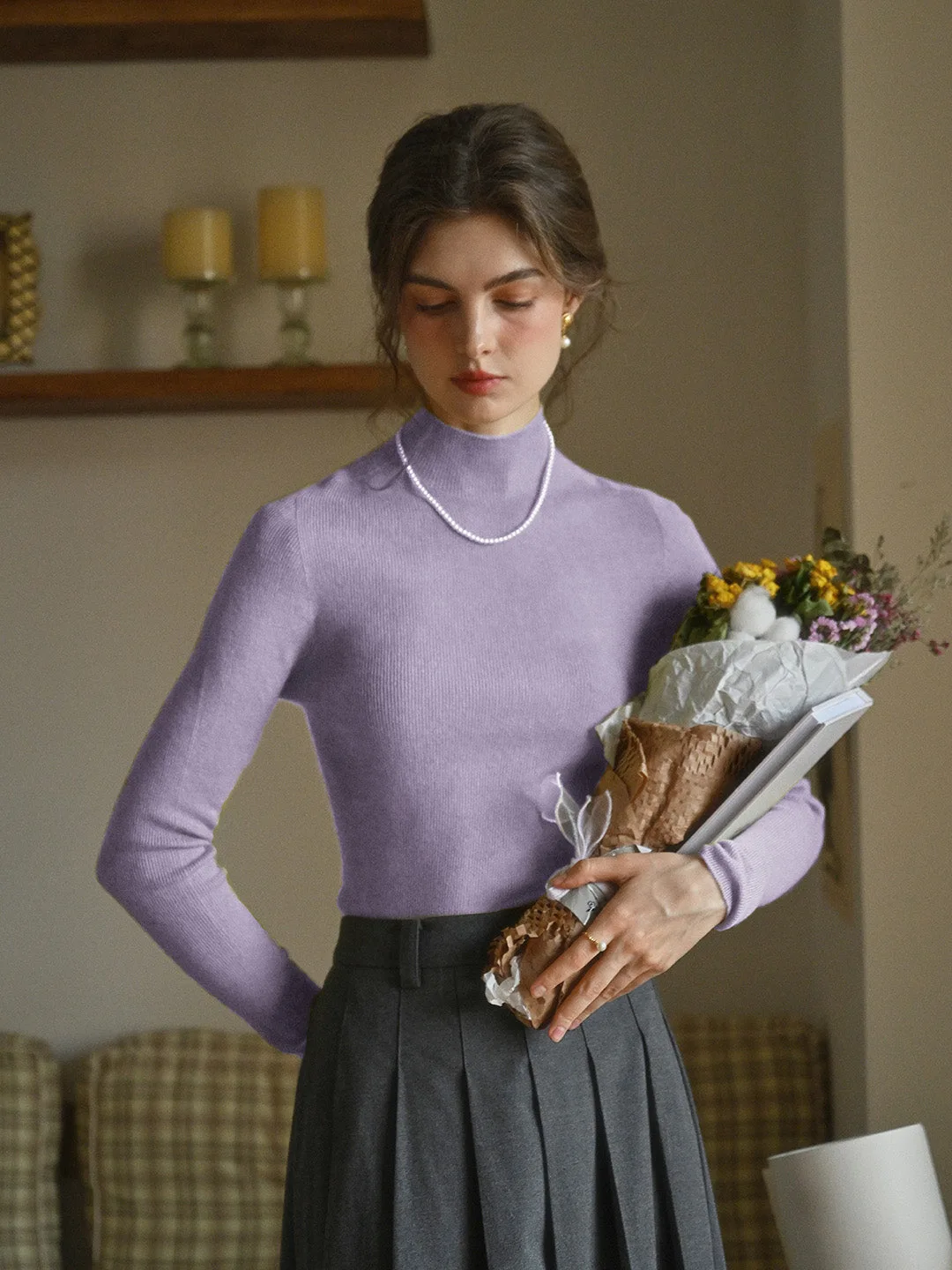
Try the layers together and bend your elbow. Notice whether the knit feels tight across the forearm, whether the shirt sleeve is pressed hard against your skin, or whether fabric gathers into a ridge inside the sweater. If the restriction begins well above the wrist, pulling the cuff down is unlikely to solve it. Choose a roomier knit sleeve or a slimmer shirt sleeve instead. A listed slim-fit sweater, such as the Erin 100% Wool Simple Mock Neck Slim Fit Sweater, may be a useful reference point when considering silhouette, but its listing does not provide sleeve measurements. Check the garment’s measurements and your own layering needs rather than assuming how it will fit over a particular shirt.
Choose a smooth underlayer where the sleeve meets
Fabric texture and sleeve details affect how easily one layer moves inside another. A relatively smooth shirt sleeve is often easier under a knit than one with pronounced gathers, bulky trim, or a wide button placket at the wrist. Those details can catch or stack up beneath the sweater, creating a lump that feels like a tight cuff.
That does not mean every shirt needs to be plain. If you want a ruffle or gathered cuff to show, try it with a sweater sleeve that has enough room to accommodate the detail. If the wrist area is already close, a simpler cuff or a less voluminous shirt sleeve may be more comfortable. Consider the fabric on the forearm, too: a crisp, full sleeve can occupy more space than a soft, narrow one even when both shirts fit on their own.
Before dressing, smooth the shirt sleeve from elbow to wrist. Make sure a seam or fold is not twisted, then put on the knit without pulling hard at the shirt cuff. This small step helps distinguish a simple wrinkle from a true lack of room.
Decide how much cuff should project
A visible strip of shirt at the wrist can make the layers look intentional, but there is no required amount. The cuff may sit just inside the sweater, show slightly, or remain mostly covered. What matters for comfort is that the shirt cuff is not trapped at an awkward angle or folded under the knit’s edge.
With the sweater on, bring the shirt cuff to a natural position and let the knit sleeve rest over it. If you have to force the sweater sleeve upward to expose the cuff, it may slide back down during ordinary movement. If the cuff disappears and feels bunched, pull the shirt sleeve gently from inside the sweater to remove excess fabric, then see whether the layers settle comfortably. Avoid repeatedly yanking the knit sleeve; that can distort the arrangement without fixing a tight circumference.
For a more noticeable cuff, roll or fold the sweater sleeve only if it stays in place without squeezing your forearm. Otherwise, let the shirt cuff show modestly at the opening. The visual effect is secondary to being able to bend and reach without a pinching edge.
Use a short movement test before you leave
A mirror check while standing still will not reveal every fit problem. Try this quick fitting exercise with the exact shirt and knit you plan to wear:
Stand naturally and note where each sleeve ends. Check that the shirt cuff is not already twisted or folded under.
Bend both elbows, reach forward as if taking something from a shelf, and cross your arms loosely. Notice whether the knit pulls, the shirt sleeve migrates, or pressure builds at the wrist.
Relax your arms, then turn your palms up and down. Check whether the cuff edge presses into your wrist or whether you need to tug the layers back into place.
Repeat with your arms at your sides for a few moments. If the discomfort returns immediately, treat it as a fit issue rather than something you must keep adjusting.
This is a practical check, not a guarantee that a garment will feel identical all day. It does help expose obvious restrictions before you commit to the outfit. If one side feels tighter, inspect both sleeves for a twisted shirt sleeve or an uneven cuff position before changing sizes.
When the wrist itself feels restrictive
If the forearm feels comfortable but the wrist feels pinched, focus on the openings and closures. A shirt cuff fastened at its tightest position may leave little room beneath the knit. Try a looser button setting if the cuff allows it, or wear the shirt cuff outside the sweater sleeve if the two openings sit more comfortably that way. Do not force a button or stretch a cuff to make the combination work.
Also check whether the knit opening is pressing against the shirt cuff’s buttons or seam. A bulky point at the wrist can create localized pressure even if the rest of the sleeve feels fine. Turning the shirt cuff so its closure rests away from the most sensitive point may help, provided it stays flat and the cuff is not twisted. If the knit opening itself feels tight against your wrist with the shirt removed, the sweater sleeve is the likely source; a looser sleeve shape is a better answer than trying to compress the shirt beneath it.
For shopping, compare garment measurements where available and use the size guide as a starting point. A size chart may help you assess the overall garment, but it may not answer how much room the sleeve opening provides. If that detail is not listed, you can contact Rustic Cottage to ask whether additional measurements are available. The knitwear collection is another place to compare sweater silhouettes; do not assume that a particular listing specifies a cuff shape or sleeve opening unless it says so.
Adjust the pairing when the layers do not cooperate
When the wrist remains uncomfortable after you smooth the shirt and reposition the cuff, change one layer at a time. Swap the shirt for one with a narrower, less detailed sleeve, then repeat the movement test. If that solves the problem, the issue was likely the underlayer’s volume. If the wrist still feels compressed, try a knit with a roomier sleeve or a different opening. This one-change-at-a-time approach makes it easier to identify what is responsible.
You can also wear the shirt cuff outside the sweater, but it works best when the cuff sits neatly and does not catch on the knit. Leaving the sweater sleeve pushed up is another option only if it stays comfortable without constant readjustment. A tidy look is not worth a sleeve that restricts your reach. If neither arrangement feels easy, wear the shirt without that knit or choose another layer for the day.
A final fit check for your next outfit
Before deciding that a shirt and sweater simply do not work together, check the sleeve from shoulder to wrist: confirm the shirt is smooth, bend your elbow, notice where the pressure begins, and see whether the cuff can rest naturally. A small adjustment to the shirt’s closure or cuff position may be enough when the rest of the sleeve has room. If the knit is tight even without the shirt, or the shirt sleeve fills the knit before it reaches your wrist, choose a different pairing.
When shopping, think about the shirt you actually plan to wear beneath a knit, not just how each piece fits alone. Looking at all clothing can help you compare options, while the movement test gives you a practical way to judge comfort at home. The best cuff detail is the one that stays comfortable as you reach, bend, and go about your day.

Explore the pieces behind the ideas
Browse our knitwear for full product photographs and listed specifications. Ask our team for fit and availability, or visit wholesale partnerships if you’re buying for a boutique.